
I adore all things citrus, and salty, mouth-puckering preserved lemons are pure citrusy magic. If you can’t find them at the store, you can make an effective substitute at home in under 30 minutes.
Traditional salt-preserved lemons need weeks to mature, but this quick preserved lemon substitute captures the salty, tart, and complex flavours of Moroccan preserved lemons. The method below is adapted from the “cheat’s preserved lemon purée” concept made popular by the Ottolenghi Test Kitchen and is an excellent, fast alternative when you need that distinctive preserved lemon punch.

Jump to an easy substitute for preserved lemons:
- Quick cheat’s preserved lemon
- Lemon paste with salt
- Lemon zest, juice and salt
- Easy salted lemon rind
- Dried lemon zest with salt flakes
Best lemons for a preserved lemon substitute
The classic preserved lemons most people seek are Moroccan-style Beldi lemons — small, round fruits with thin, fragrant skin and sweet flesh that take on almost candy-like lemony notes when preserved. Beldi lemons aren’t widely available everywhere, so use the best replacements you can source.
Meyer lemons are a top choice for homemade preserved lemons and for this cheat’s preserved lemon recipe. Meyer lemons are a cross between lemons and mandarins: their peel has floral notes and the flesh is sweeter and less tart than standard lemons, which helps mimic the rounded flavour of preserved Beldi lemons.
If Meyer lemons aren’t available, regular Eureka or Lisbon lemons work fine. Seedless varieties such as LemonGold make prep cleaner since you don’t have to remove pips. If you like a hint of sweetness, add a strip of mandarin zest or a teaspoon of mandarin juice when substituting for Beldi lemons.
Preserved lemon substitutes overview
Preserved lemons provide a concentrated, salty-citrus lift to many dishes. Depending on a recipe’s needs—peel only, chopped preserved lemon, or preserved lemon purée—different substitutes work best. Below are five straightforward options to replace preserved lemons in dressings, stews, salads, roasted vegetables and sauces.
- Quick cheat’s preserved lemon
- Lemon paste with salt
- Lemon zest, juice and salt
- Easy salted lemon rind
- Dried lemon zest with sea salt flakes
1. Cheat’s preserved lemon: The best preserved lemon substitute
This quick preserved lemon mimics the soft texture and bright salty-tart flavour of preserved lemons. It is fast to prepare and works well spooned over grilled meat or vegetables, chopped into salads, or blitzed into a purée for dressings and sauces.
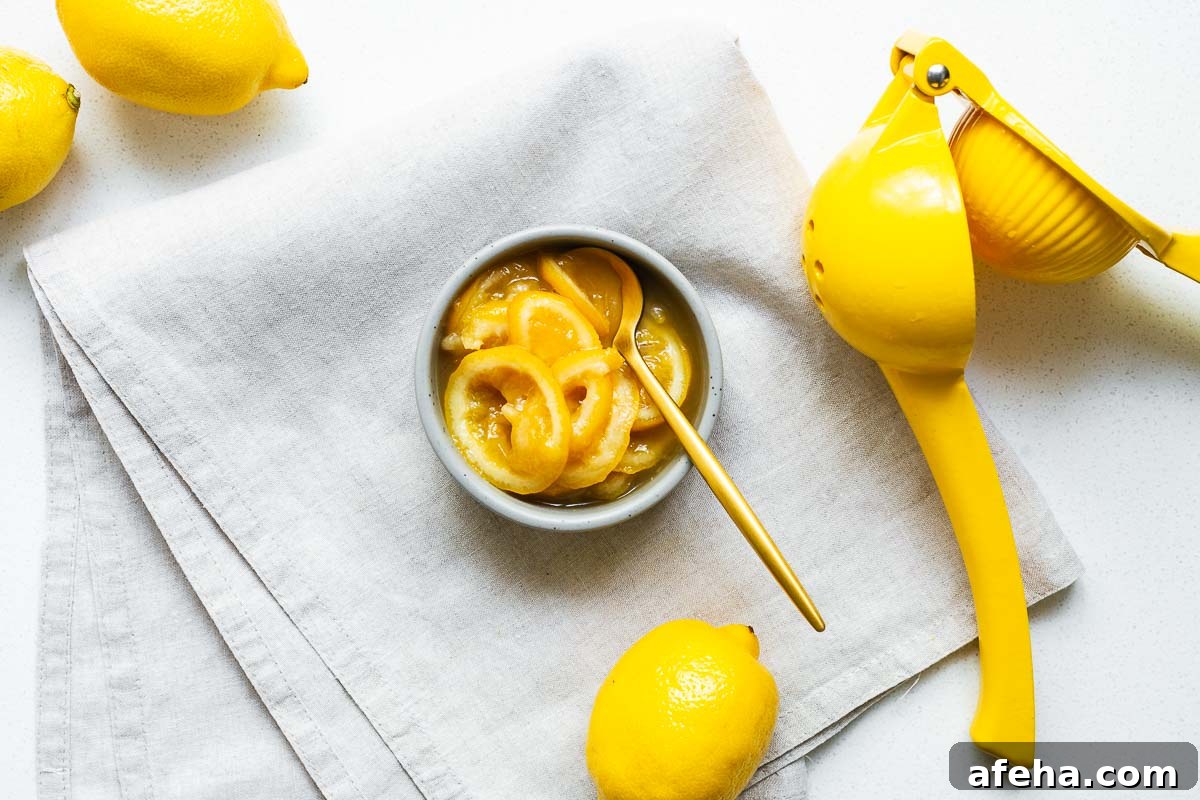
How to make the quick preserved lemon substitute
To replicate the soft, gelatinous texture of preserved lemon peel, we gently cook thin lemon slices in lemon juice and salt until the peel softens and the juice reduces to a syrupy glaze.
Ingredients (for roughly 1/3 cup finished):
- 2 small lemons (or 1 large), ends trimmed and sliced thinly
- 1/3 cup fresh lemon juice (about 2–3 small lemons)
- 2½ teaspoons salt (approximately a heaped teaspoon per small lemon)

Method:
- Pick out and discard any seeds from the lemon slices. Place slices in a small saucepan with the lemon juice and salt.
- Bring to a gentle simmer over medium heat. As soon as it simmers, lower the heat to the smallest flame and cover.
- Cook for 12–14 minutes, stirring once halfway through. The lemon juice will thicken into a syrup as the slices soften. If the pan becomes too dry, add a splash of water to prevent burning.
- Remove from heat and allow to cool to room temperature. Use whole slices, roughly chop them, or blitz with a stick blender to make a purée.
Tip: Zest lemons before juicing and save the zest. Dried lemon zest is convenient and can be used as a garnish or dried finishing salt.
2. Lemon paste + salt: A preserved lemon purée alternative
Lemon paste or concentrated lemon purée is thick and sweet compared with true preserved lemon purée. To approximate preserved lemon’s savoury-salty edge, stir in one teaspoon of salt for every tablespoon of lemon paste. This salted lemon paste works well as a direct stand-in for preserved lemon purée in dressings and sauces.
3. Lemon zest + juice + salt: Quick for dressings and marinades
For bright, fresh dishes like salads or quick marinades, combine grated lemon zest, fresh lemon juice and a little sea salt. Although it lacks the depth of aged preserved lemons, this zesty-salty mix delivers immediate citrus lift. Use it fresh or keep leftovers chilled for up to a week.
4. Lemon rind + salt: A preserved lemon peel replacement
If a recipe calls for preserved lemon peel only, shave or pare fresh lemon peel with a little pith, mince it, and massage in about 1/2 teaspoon of salt per lemon. Let it sit for at least an hour—overnight in the fridge is better—so the salt softens the peel and draws out flavour. Store in an airtight container for up to a week.
5. Dried lemon zest + sea salt flakes: Zesty finishing salt
Mix two parts dried lemon zest with one part sea salt flakes for a punchy citrus finishing salt. It’s perfect where recipes call for a sprinkle of minced preserved lemon or a bright lemony topping.
How to use preserved lemon substitutes
The quick cheat’s preserved lemon is the most versatile substitute. Spoon the softened slices over grilled meats or vegetables, chop them into salads and grain bowls, or blitz into a purée for dressings and sauces. Use a heaped tablespoon of the cheat’s preserved lemon to replace one preserved Beldi lemon in most recipes.
For pureé-style uses, blend the cooked slices with their syrup using a stick blender or mash them with a mortar and pestle. Mix the purée with tahini for an instant lemon-tahini dressing or add to vinaigrettes and grain salads for bold citrus flavour.
True preserved lemons are easy to make at home and keep for up to a year, but they do require resting for at least four weeks. Meanwhile, the quick preserved lemon substitute gives you the same salty-citrus brightness in minutes, making it a handy shortcut for everyday cooking.

Quick Preserved Lemon Substitute Recipe
Ingredients
- 2 small lemons (or 1 big one), ends trimmed and sliced thinly
- ⅓ cup fresh lemon juice (from 2–3 lemons)
- 2½ teaspoons salt
Instructions
- Remove and discard any seeds from the lemon slices. Add the slices, lemon juice and salt to a small saucepan with a lid.
- Place over medium heat and bring to a gentle simmer. As soon as it simmers, lower the heat and cover. Cook for 12–14 minutes, stirring once halfway through, until the juice reduces and the slices soften.
- Allow the cooked lemons to cool to room temperature. Use whole, chopped, or puréed as needed in recipes.
Notes
- Watch the pot while cooking. If it dries out before the lemons are soft, add a splash of water and continue cooking to avoid burning.
- Store quick preserved lemons in a clean airtight container in the fridge for up to a month. Press the rind down so it stays submerged in the syrupy juice and always use clean utensils to remove portions.
- To make a preserved lemon purée substitute, blitz the cooled slices and their syrup with a stick blender or mash with a mortar and pestle.
- One heaped tablespoon of this cheat’s preserved lemon roughly replaces one preserved Beldi lemon in recipes.