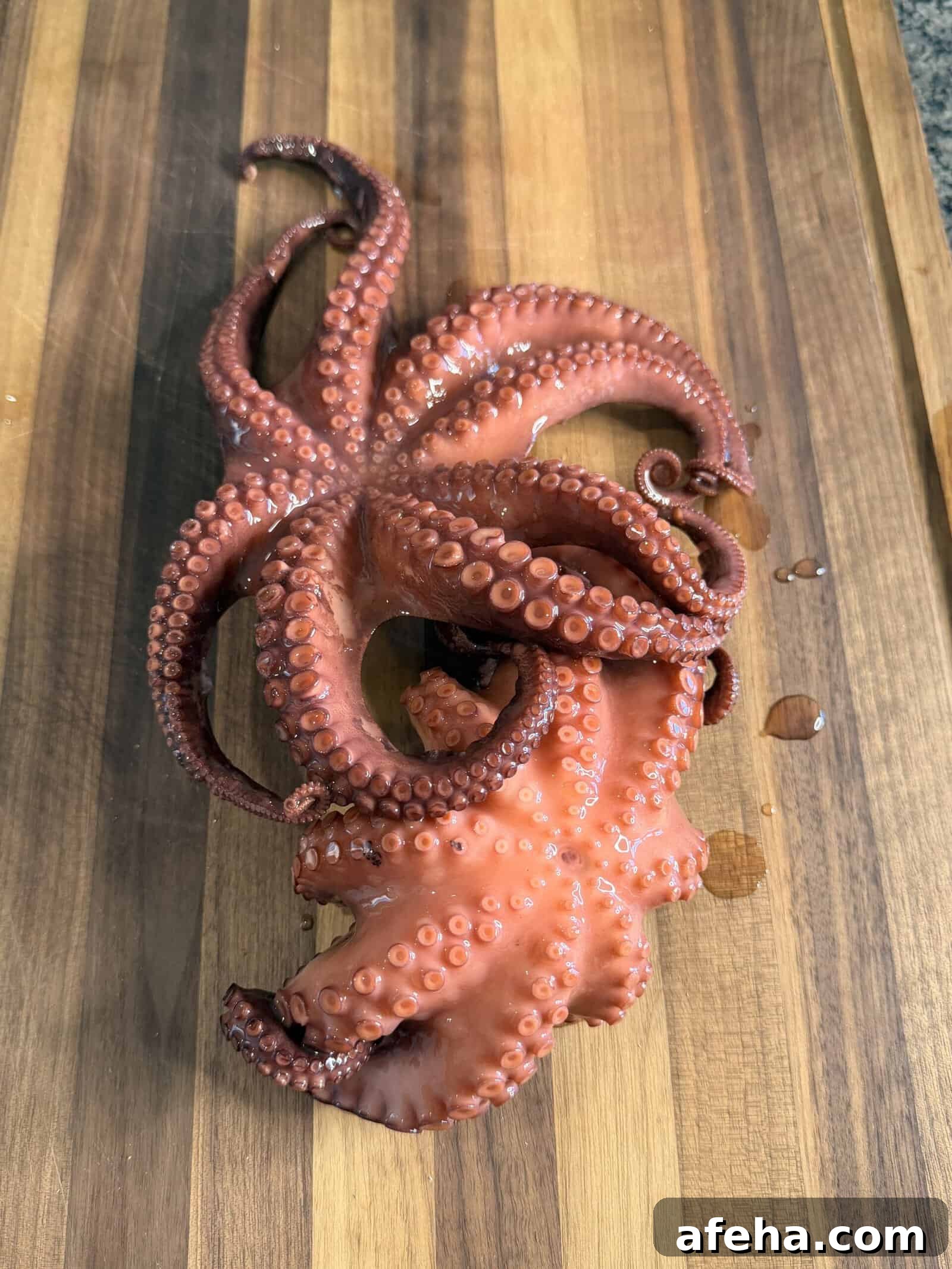
Octopus can be divisive for some, but in my Italian family it was a regular on the table—especially in summer and at large gatherings. Platters of seafood salad, grilled vegetables, cold wine, and octopus prepared in a few different ways were common at those meals.
Many people worry about cooking octopus because it can become tough and rubbery if mishandled. The truth is that it’s straightforward once you learn the basics: either cook it very quickly or cook it low and slow until it becomes tender. I prefer the low-and-slow method because it’s forgiving and reliably yields tender, silky octopus.
For preparation I usually remove the beak and trim the head just above the eyes for a neater presentation, though that step is optional. After that, it’s simply a matter of gently simmering the octopus until it’s tender, then letting it cool in its cooking liquid so it stays juicy and flavorful.
Once cooked, the octopus can be served in multiple ways. Chilled in a bright salad with lemon, olive oil, celery, and herbs is a favorite. It also shines when briefly grilled or seared in a hot cast-iron pan to get crisp, charred edges on the tentacles.
Why You’ll Love It
- Consistently tender: the low-and-slow simmer prevents rubbery texture.
- Versatile and impressive: serve chilled, grilled, seared, or add to pasta and other seafood dishes.
- Simple ingredients: most flavor comes from the octopus plus a few aromatics.
- Great for entertaining: cook ahead and serve cold or reheat briefly on the grill for crisp edges.
Ingredients
- Whole octopus, fresh or frozen and thawed
- Water, enough to fully cover the octopus
- Lemon or lemon peel
- Bay leaves
- Peppercorns
How to Make Octopus
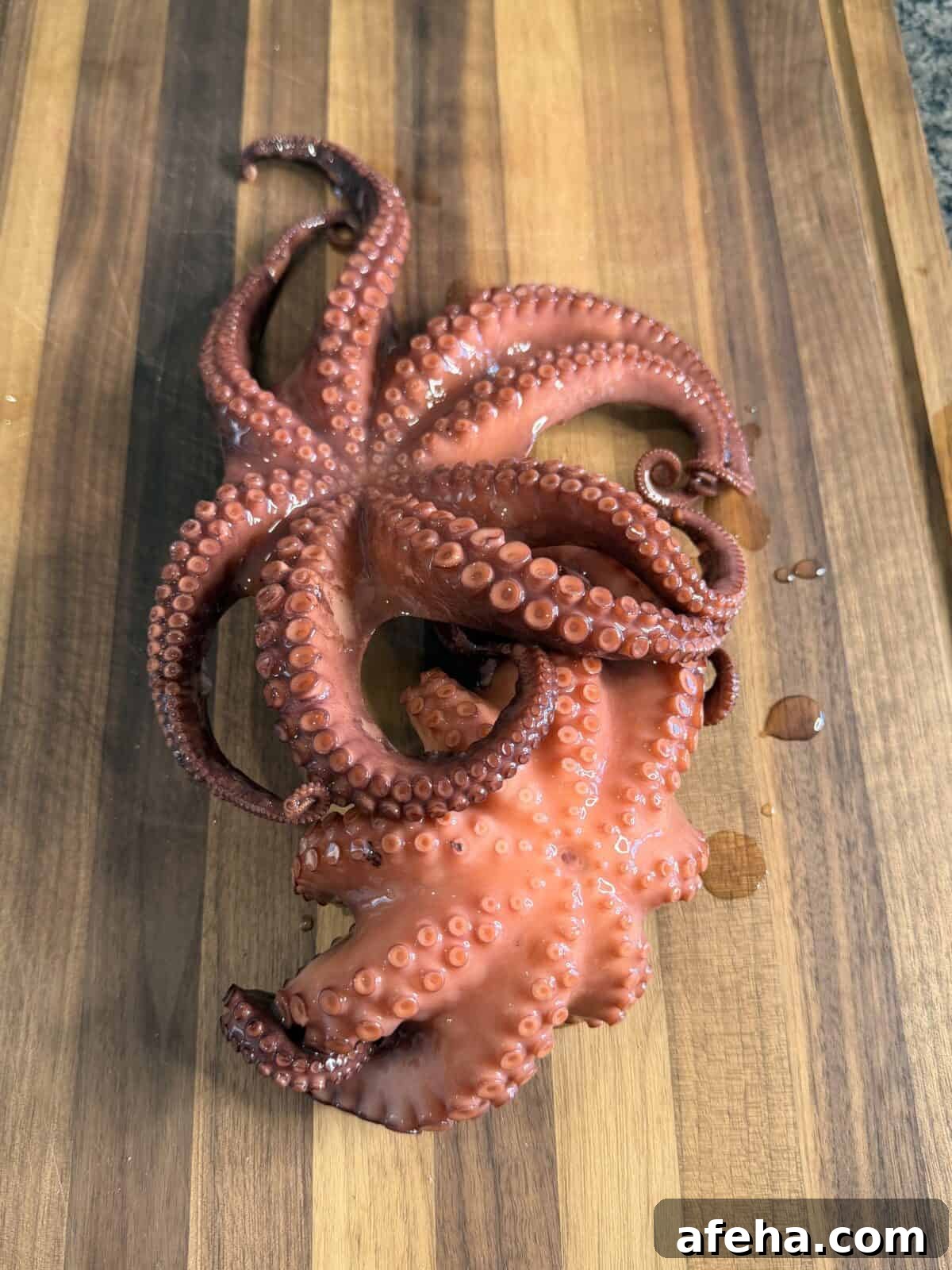
- Clean the octopus. Remove the beak from the center under the tentacles. Optionally, trim the head just above the eyes for a cleaner look.
- Prepare the pot. Put the octopus in a large pot and add enough water to fully cover it. Add the lemon (or peel), bay leaves, and peppercorns.
- Bring up to a gentle simmer. Heat over medium and raise the liquid slowly to a gentle simmer. Avoid a vigorous boil.
- Simmer low and slow. Reduce the heat, cover, and let it simmer gently for 45 minutes to 1 hour, depending on size. Smaller octopus will finish sooner; larger specimens may need more time.
- Test for doneness. Insert a knife into the thickest part of a tentacle. It should slide in with little resistance.
- Cool in the cooking liquid. Turn off the heat and let the octopus cool completely in its liquid to retain moisture and flavor.
- Finish and serve. Slice and serve chilled in a salad with lemon and olive oil, or pat dry and grill or sear the tentacles in a hot pan until lightly charred at the edges.
Tips and Tricks
- Keep the simmer gentle—boiling can toughen the meat.
- Cooling the octopus in its cooking liquid preserves juiciness and texture.
- Frozen octopus works well; freezing helps tenderize it naturally.
- If you plan to grill, pat the octopus dry before charring to get better browning and crispness.
Leftovers
Store leftover octopus in an airtight container in the refrigerator for up to three days. It’s excellent cold in salads, folded into pasta, or quickly reheated in a hot pan or on the grill to restore crispy edges.
FAQ
Yes. A gentle simmer is necessary to tenderize the octopus; grilling alone won’t make it tender.
Rubbery texture usually means it was undercooked or cooked too aggressively. A low, steady simmer is key to avoid that.
Yes. Making it ahead is often better because the octopus cools in its liquid and develops more flavor.
Yes. Many cooks prefer frozen octopus because the freezing process helps tenderize it.
How to Cook Octopus
6 people
1 hr
Ingredients
- 1 whole octopus
- Water, enough to cover
- Lemon or lemon peel
- Bay leaves
- Peppercorns
Instructions
- Remove the beak and, if you like, trim the head above the eyes.
- Place the octopus in a large pot and add enough water to cover it.
- Add the lemon, bay leaves, and peppercorns.
- Bring the liquid to a gentle simmer over medium heat.
- Reduce the heat, cover, and simmer for 45 minutes to 1 hour, depending on size.
- Test doneness by sliding a knife into the thickest part of a tentacle; it should meet little resistance.
- Turn off the heat and let the octopus cool completely in its cooking liquid.
- Slice and serve chilled with lemon and olive oil, or pat dry and grill or sear until slightly charred.