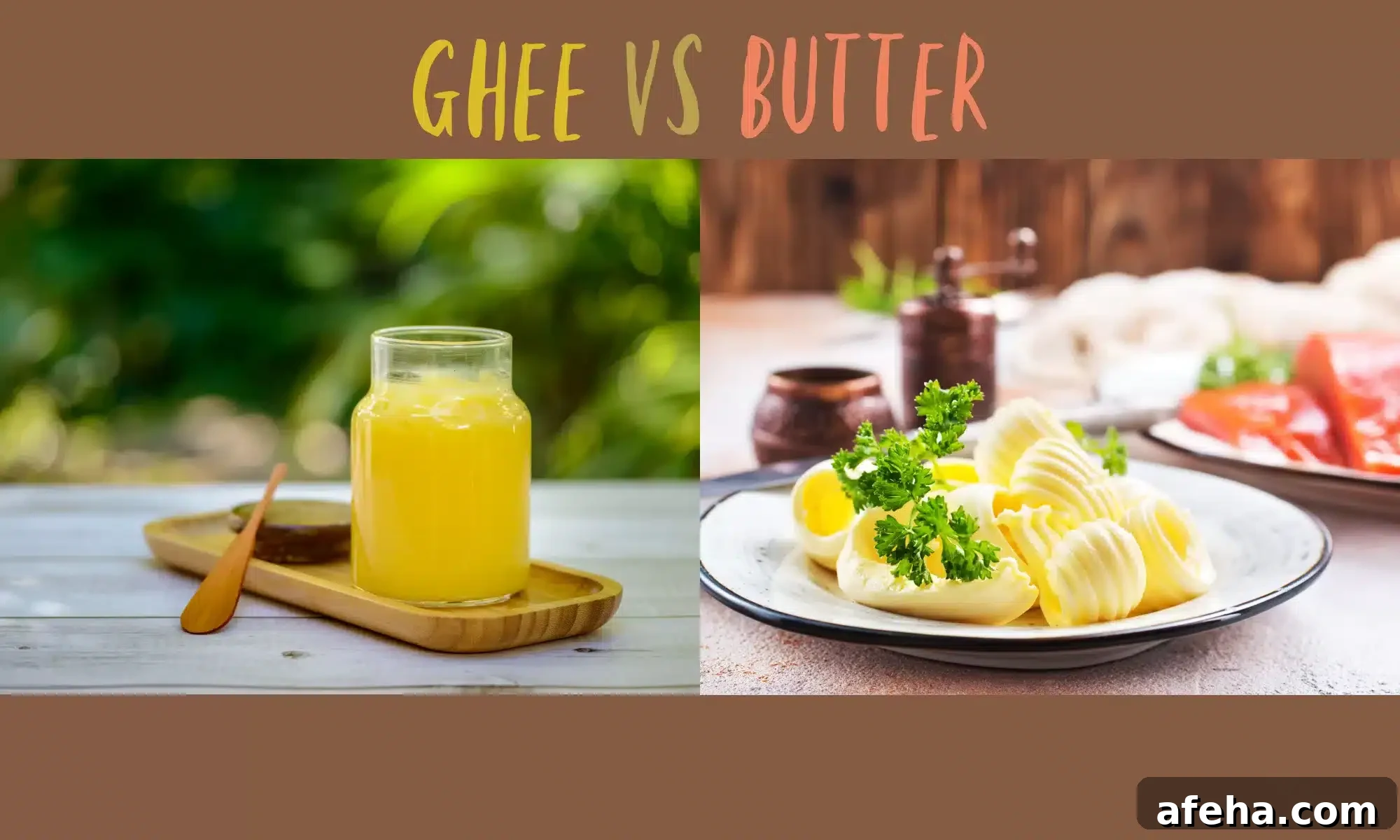
If you think butter is already perfect, ghee—the clarified, lactose-free form of butter—might change your mind.
Let’s take a closer look at this popular alternative to butter and how it compares in cooking, nutrition, and storage.
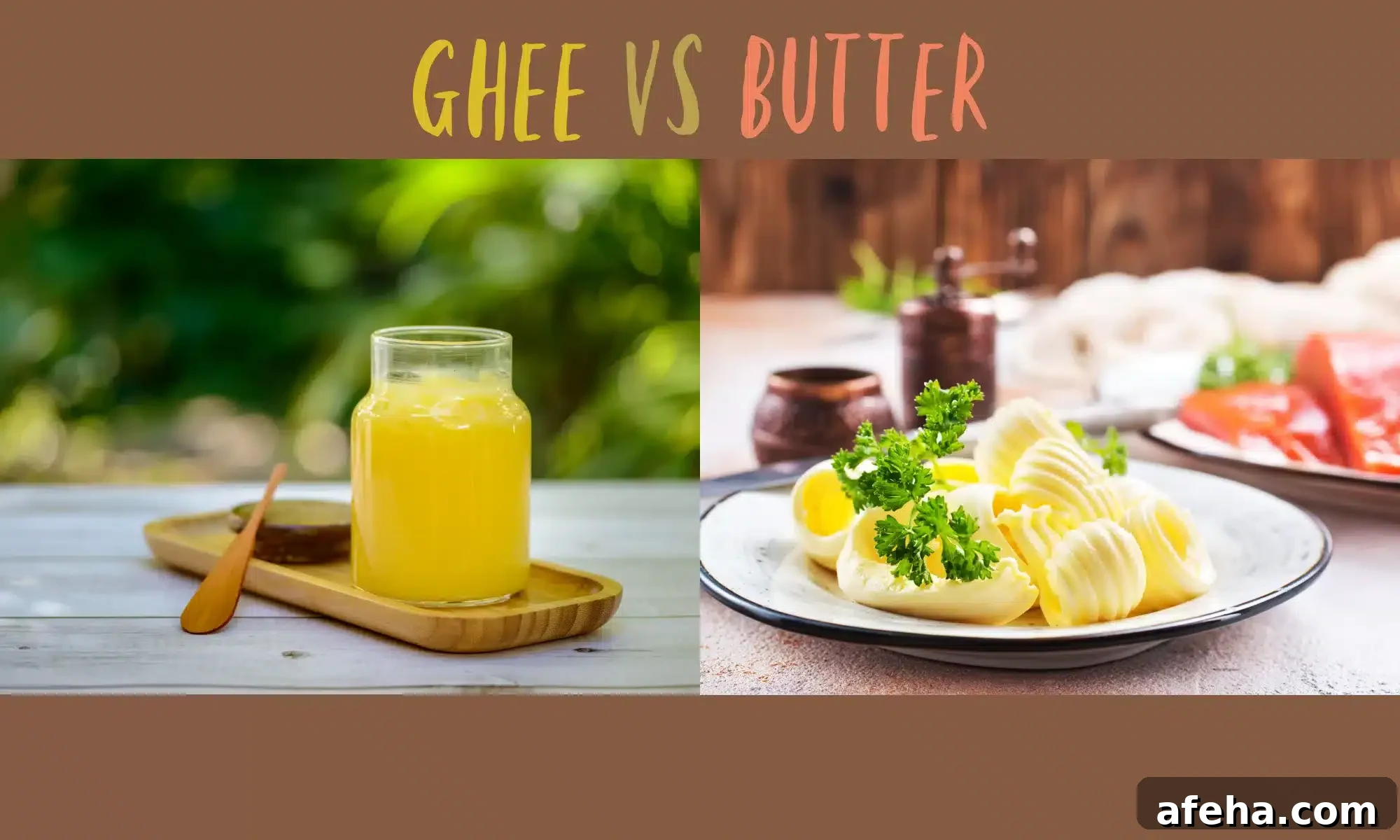
Comparing ghee vs butter
| Ghee (clarified butter) | Butter | |
| Solid or Liquid? | Semi solid | Solid |
| Smoke Point (Fahrenheit) | 480 degrees | 300–350 degrees |
| Primary Fat | Saturated | Saturated |
| Taste | Buttery, slightly nutty | Buttery |
| Good for Cooking… | Raw, low heat, moderate heat, high heat | Raw, low heat |
| Allergens | Milk (trace proteins possible) | Lactose, casein |
| Gluten-free? | Yes | Yes |
| Keto? | Yes | Yes |
| Paleo? | Mostly yes (some debate) | No |
| Vegan? | No | No |
Differences between ghee and butter
Ghee and butter both originate from cow’s milk but undergo different processes. Ghee is made by simmering butter until water evaporates and milk solids separate, leaving behind a clear, golden fat with a concentrated, slightly nutty butter flavor. Butter is produced by churning cream, resulting in a product that contains fat, water, milk solids, and lactose.
Because ghee is essentially pure fat with the milk solids removed, it has a higher smoke point and greater shelf stability than butter. Butter’s water and milk solids make it more prone to burning at higher temperatures and more likely to spoil if not stored properly.
Baking and cooking with ghee vs butter
Ghee’s high smoke point and intense flavor make it ideal for high-temperature cooking—stir-frying, searing, roasting—and for dishes that benefit from a rich, toasty note, such as many Indian recipes and roasted vegetables. You can also use ghee in baking to add flakiness to pie crusts or a deeper flavor to cookies and muffins.
Butter shines in low-temperature applications and baked goods where its water content helps create steam for flaky layers and tender crumb. Use butter for sautéing at moderate heat, scrambling eggs, finishing sauces, or baking cakes, cookies, and buttercream where its texture and milky flavor are desirable.
Can ghee and butter be substituted for each other?
Yes—ghee and butter can typically be substituted 1:1 in recipes since ghee is clarified butter. Keep in mind, though, that ghee’s flavor is more concentrated and its lack of moisture alters texture in some baked goods. Also consider cooking temperature: ghee is preferable for high heat, while butter is better for recipes relying on its water and milk solids.
Nutrition: Ghee vs butter
Per tablespoon, ghee and butter are similar in total fat, but ghee contains slightly more calories and saturated fat. Ghee is also a source of fat-soluble vitamins such as A, D, and E, and it contains butyric acid, a short-chain fatty acid associated with anti-inflammatory and gut-supporting properties.
Because milk solids are removed during clarification, ghee generally has little to no lactose or casein, which can make it tolerable for some people with dairy sensitivities. However, ghee is not completely dairy-free and may still contain trace proteins. Butter contains measurable lactose and casein along with similar fat-soluble vitamins. Both should be consumed in moderation due to their saturated fat content.
| Per tablespoon (15 mL) | Ghee (clarified butter) | Butter |
| Calories | 123 | 102 |
| Polyunsaturated | 0.5 g | 0.4 g |
| Monounsaturated | 4.0 g | 3.0 g |
| Saturated | 8.7 g | 7.3 g |
| Trans | 0 g | 0.5 g |
| Total Fat | 14 g | 14.2 g |
| Cholesterol | 35.8 mg | 30.5 mg |
The primary fat source in both products is saturated fat.
How to store ghee and butter
Because the milk solids and moisture are removed, ghee is more shelf-stable than butter. Stored in an airtight container at room temperature, ghee can last several months; refrigerated, it can keep for up to a year. Keep it away from direct sunlight and moisture to preserve flavor and quality.
Butter should be stored in an airtight container in the refrigerator for short-term use (up to about a month) or in the freezer for longer-term storage (up to six months). Avoid exposing butter to light, heat, or strong odors to maintain freshness.
Ghee vs butter: Which is better
Both ghee and butter have distinct strengths. Butter is ideal for low-temperature cooking and many baking applications where its moisture and milk solids contribute to texture. Ghee is better suited to high-heat cooking, has a longer shelf life, and may be tolerated by people with mild lactose sensitivity.
If forced to choose one, many cooks prefer ghee for its higher smoke point and concentrated flavor, but the best choice depends on the recipe and dietary needs.
FAQs
Ghee and butter have similar nutritional profiles. Ghee offers a higher smoke point and is typically low in lactose and casein, which may benefit those with sensitivities, but both are high in saturated fat and should be eaten in moderation.
Ghee’s higher smoke point and longer shelf life make it suitable for high-temperature cooking and longer storage. Its reduced lactose and casein content can also make it a better option for some people with dairy sensitivities.
Ghee retains a buttery flavor but tends to taste richer and slightly nuttier because the milk solids are removed during clarification.