Having a toddler and a baby is challenging, overwhelming, and wonderfully chaotic.
With two little ones to care for, your days are a juggling act of nursing, diaper changes, snack times, and trying to keep the house from looking like a disaster zone.
And you can’t remember the last time you went a full day without spit-up or food stains on your clothes.
(Did I even brush my teeth today?)
I’ve been there—multiple times. I had my second child when my oldest was 14 months, and eventually I had four children four and under while still teaching evening classes. So I know firsthand how chaotic it can feel.
One of the best ways to regain some sanity is to create a realistic schedule and routine that works for you, your toddler, and your baby.
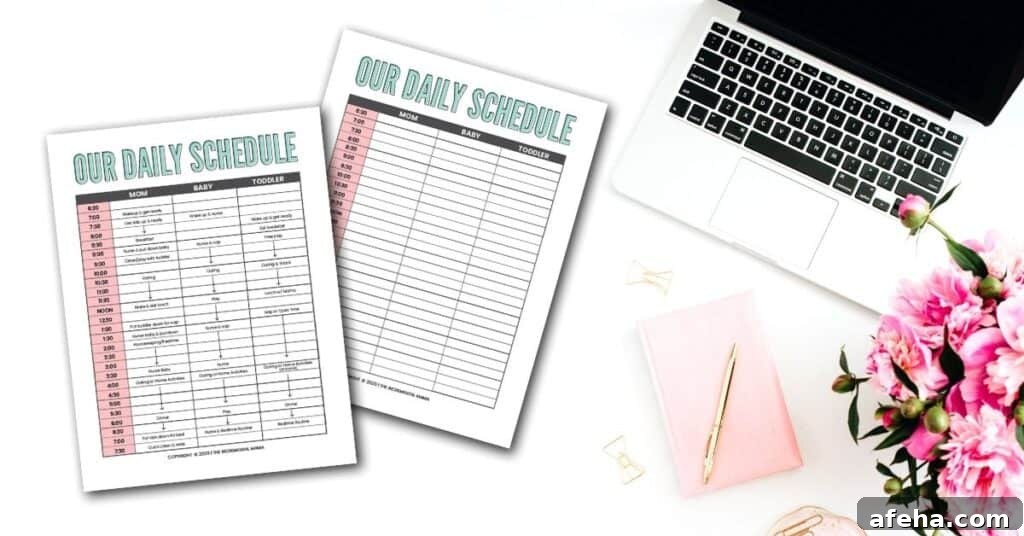
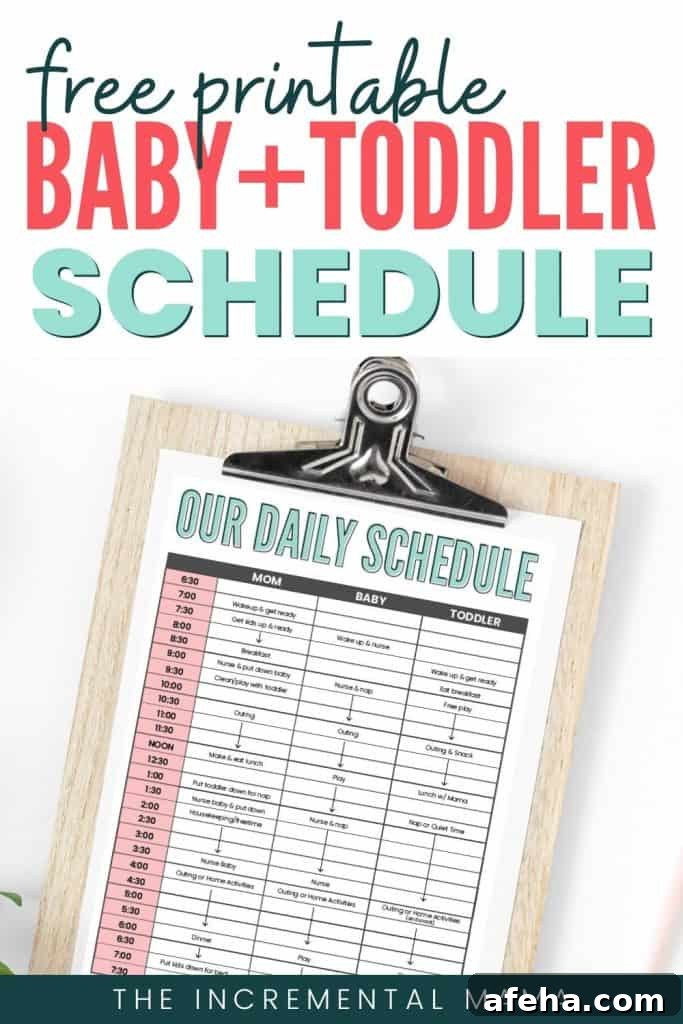
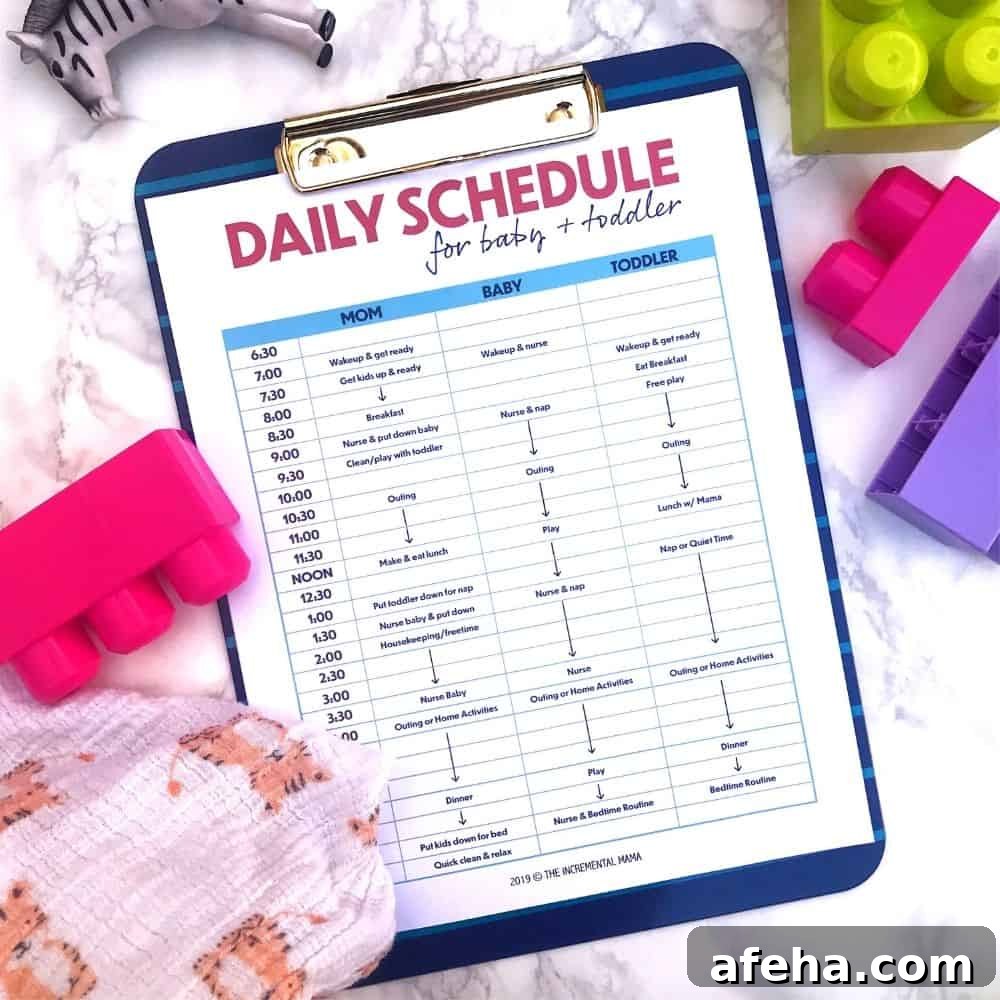
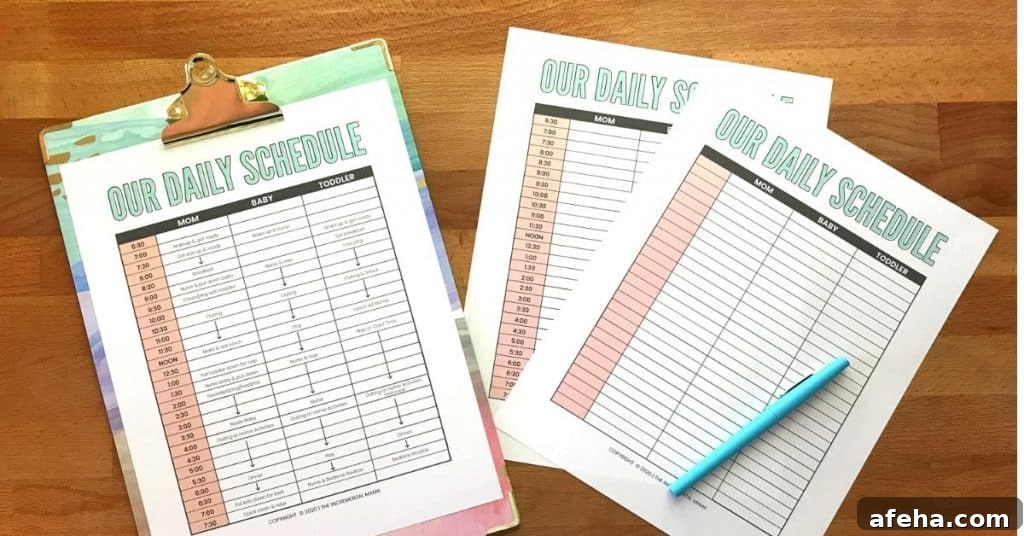
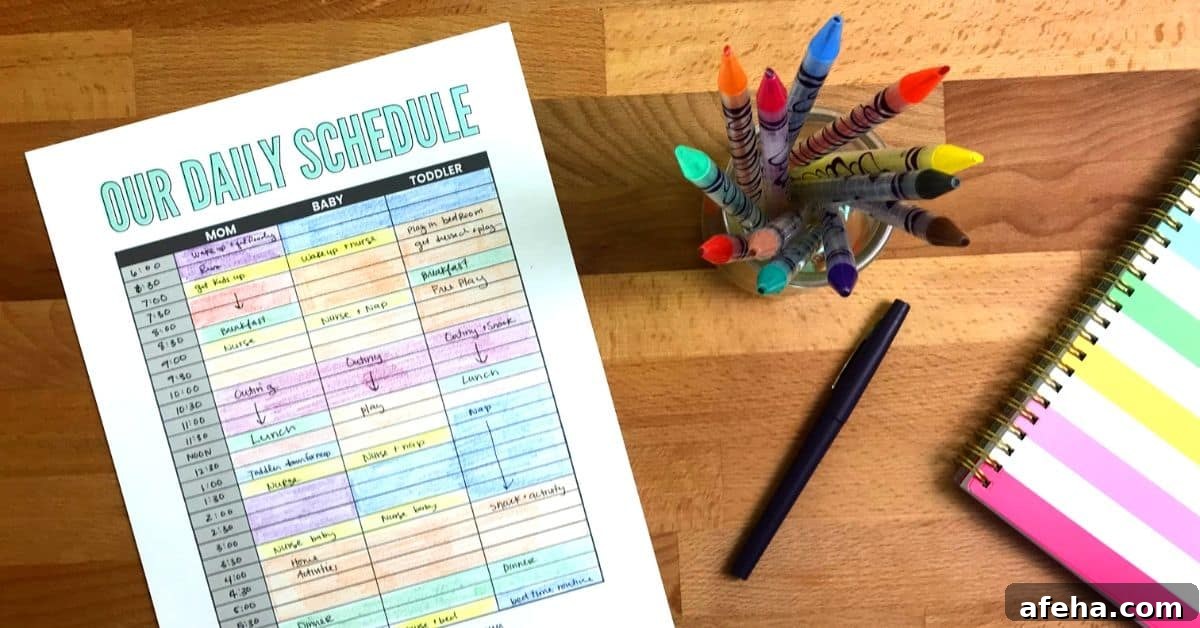
This post offers a practical, sample stay-at-home mom schedule for a toddler and baby and tips for adapting it to your family. There’s also a free printable with the sample schedule and customizable daily templates you can fill out to match your needs.
(If you only want the printables, they’re offered at the end of this post.)
Creating a Schedule for a Toddler and a Baby
No two families are the same, so a schedule should be flexible and tailored to your children’s needs. The sample schedule below is designed to give structure while leaving room for reality—naps shift, appointments pop up, and life happens.
A helpful schedule usually includes:
- nursing or bottle feeds for baby
- meals and snacks for toddler and parents
- nap and quiet-time windows for both children
- daily outings and playtime
- light cleaning and household tasks
- time for rest so everyone—yes, including you—gets enough sleep
I don’t believe in rigid timetables. Instead, predictable routines and familiar patterns make life easier for everyone. Kids feel secure when they know what comes next, and routines help parents accomplish more with less effort.
Routines also build helpful habits: over time the day flows by with less mental energy spent deciding what to do next.

Sample Stay-at-Home Mom Schedule for a Toddler and Baby
This example is for a stay-at-home mom with a nursing baby around 3–6 months (typically 2–3 naps a day) and an active toddler. It’s a flexible template you can shift earlier or later, add or remove naps, and adjust feeding times.
Typical outcomes with this schedule:
- Mom can aim for 7–8 hours of sleep and keep up on essential household duties.
- Baby gets 2–3 naps, several nursing sessions, and about 14–15 hours of total sleep.
- Toddler gets one nap or a reliable quiet time and around 13–14 hours of rest.
6:30 — Wake Up & Get Ready
Wake up before the kids if you can. Even 15 minutes for a shower, a quick stretch, or to plan the day makes a big difference. A calm start sets the tone for the rest of the morning.

7:00 — Get Baby Up
Change diapers, dress, cuddle, and nurse. Getting the baby up first allows for one-on-one time before the busier parts of the morning begin.
7:30 — Get Toddler Up
Help your toddler with potty or diaper changes, get dressed, and do a quick tidy of their room. Teaching simple tidy-up habits early helps them become more helpful over time.
8:00 — Breakfast
Serve a quick, prepared breakfast to make mornings easier—think make-ahead muffins, waffles, or pancakes you can heat and serve. This keeps the morning smooth while you manage both kids.
8:30 — Baby Nap / Toddler Playtime
Put the baby down for the morning nap and encourage independent play for the toddler. Use this time for light chores like clearing breakfast, a load of laundry, or focused playtime with your toddler.
10:00 — Wake Baby & Feed
Wake and nurse the baby, then prepare for a mid-morning outing if the day allows.
10:30 — Toddler Snack & Outing
Getting out for a walk, errands, or a visit to the park breaks up the day and is good for everyone’s mood. Aim for short daily outings that may double as exercise or errands—two birds, one stone.
- Walk or stroller run
- Park, library, or zoo visit
- Quick grocery run while baby is in a carrier
12:00 — Lunch
Return home for a simple lunch. This meal helps transition into the calmer afternoon when naps or quiet time happen.

1:00 — Toddler Nap / Nurse & Baby Nap
Put the toddler down for a nap or quiet time and nurse and lay down the baby. Use this overlap for rest, a short nap if you need it, or to prep dinner and do focused tasks while you have quiet time.
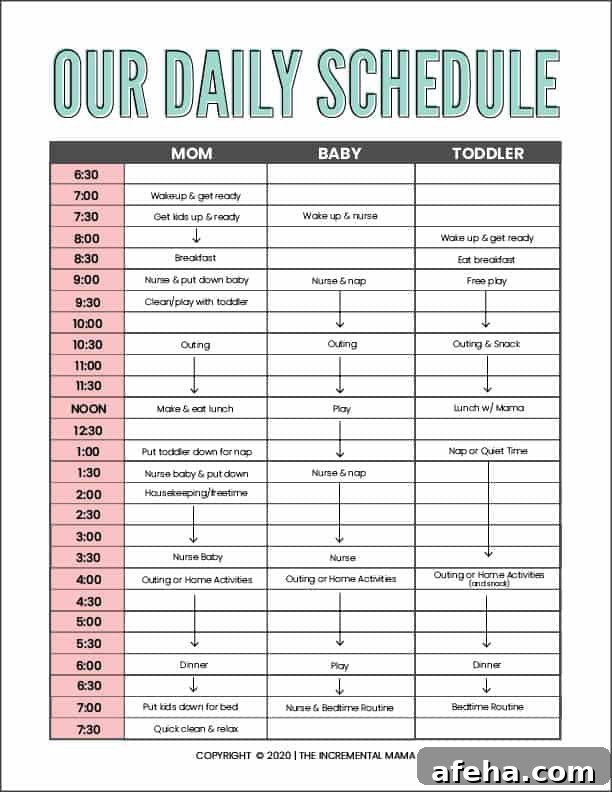
3:30 — Wake Baby & Nurse
A post-nap feed helps the baby stay content through the late afternoon and into the evening routine.
4:00 — Play or Short Outing
Depending on energy levels, do indoor play, head to the park, or run an errand. This is also a good slot to fit in a short workout or active play session with the toddler.
5:30 — Dinner & Family Time
Dinner together when possible helps establish family rhythm. Keep meals simple and nutritious; prepping earlier in the day makes evenings much easier.
7:00 — Bedtime Routine
Begin the bedtime routine with bath, books, nursing, and lullabies. A predictable, calm routine signals it’s time to sleep and often reduces tears and fussing.
7:30 — Quick Tidy & Prep for Tomorrow
Do a short tidy with your partner—load the dishwasher, pick up toys, and prepare anything needed for the next morning. A 15-minute power clean prevents clutter from piling up and reduces stress.
8:00 — Relax and Unwind
Reserve intentional nighttime routines that help you relax: reading, stretching, journaling, a warm bath, or chatting with your partner. Avoid heavy screen time close to bed to improve sleep quality.
- read
- talk to your partner
- take a hot bath
- stretch or journal
- plan the next day
9:30–10:30 — Bedtime
Aim for consistent sleep. When you get enough rest, life feels easier: you have more patience, more energy, and you get more done in less time.
Creating Your Own Toddler and Baby Schedule
Use the sample schedule as a starting point and personalize it. When designing your ideal routine, list and order these elements:
- sleep and nap windows
- meals and snacks
- daily outings
- exercise or active play
- light cleaning tasks
- meal prep or dinner planning
This season may be busy and messy, but it’s also full of cuddles and unforgettable moments. Grab printable schedule templates to customize and create a routine that supports your family and your sanity.
You’ve got this, mama!
Additional Resources
- The 10 Best Double Strollers for a Newborn & Toddler
- How to Prepare Your Toddler for a New Baby
- How to Get Stuff Done with a Baby and a Toddler
- How to Survive a Toddler and Newborn