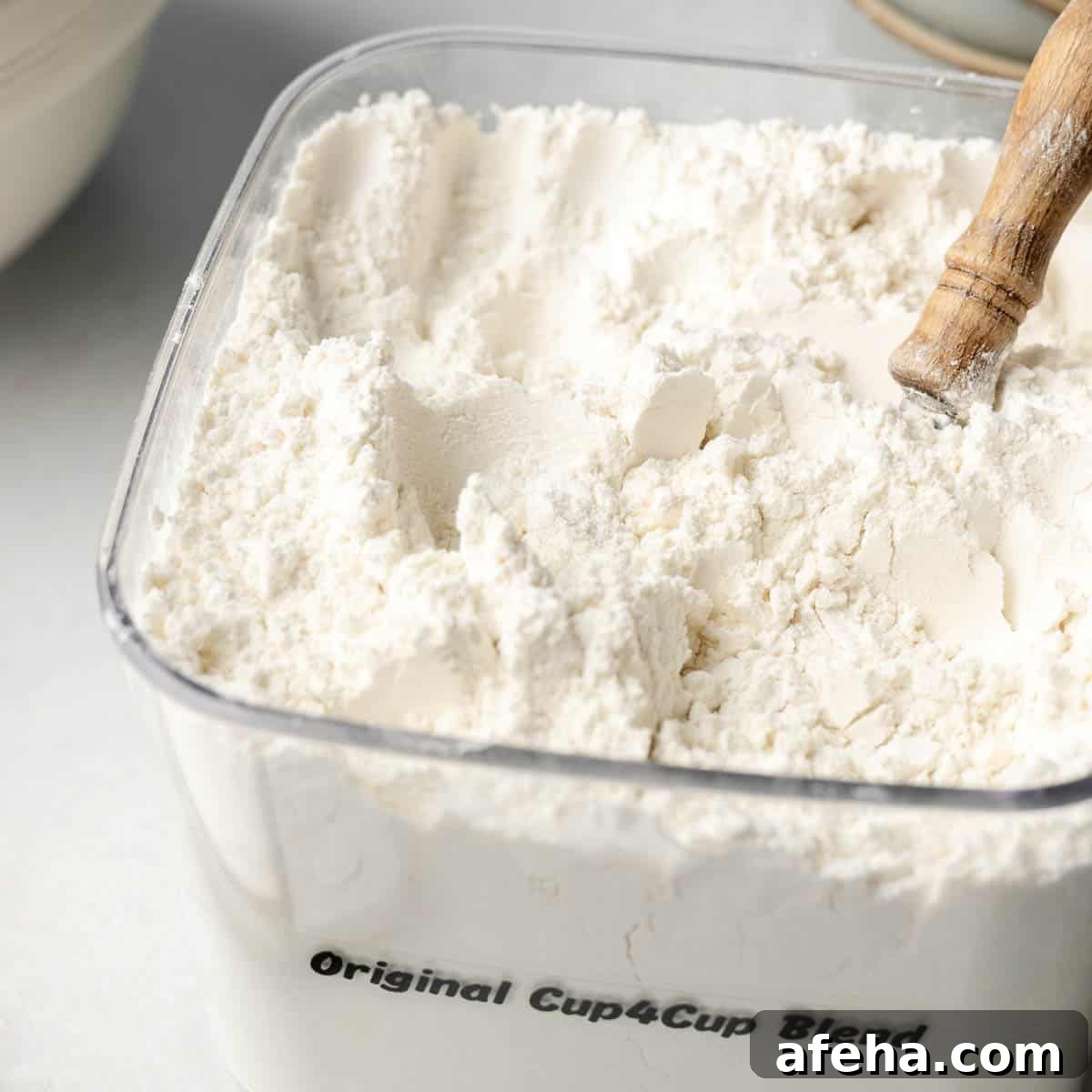
If you’re looking to recreate the original Cup4Cup multipurpose gluten-free flour blend—the version that lists milk powder and cornstarch near the top of the ingredients—this copycat recipe will help you make a close match at home. It performs beautifully as a pastry-style gluten-free flour for pies, biscuits, cookies, pasta, and delicate baked goods.
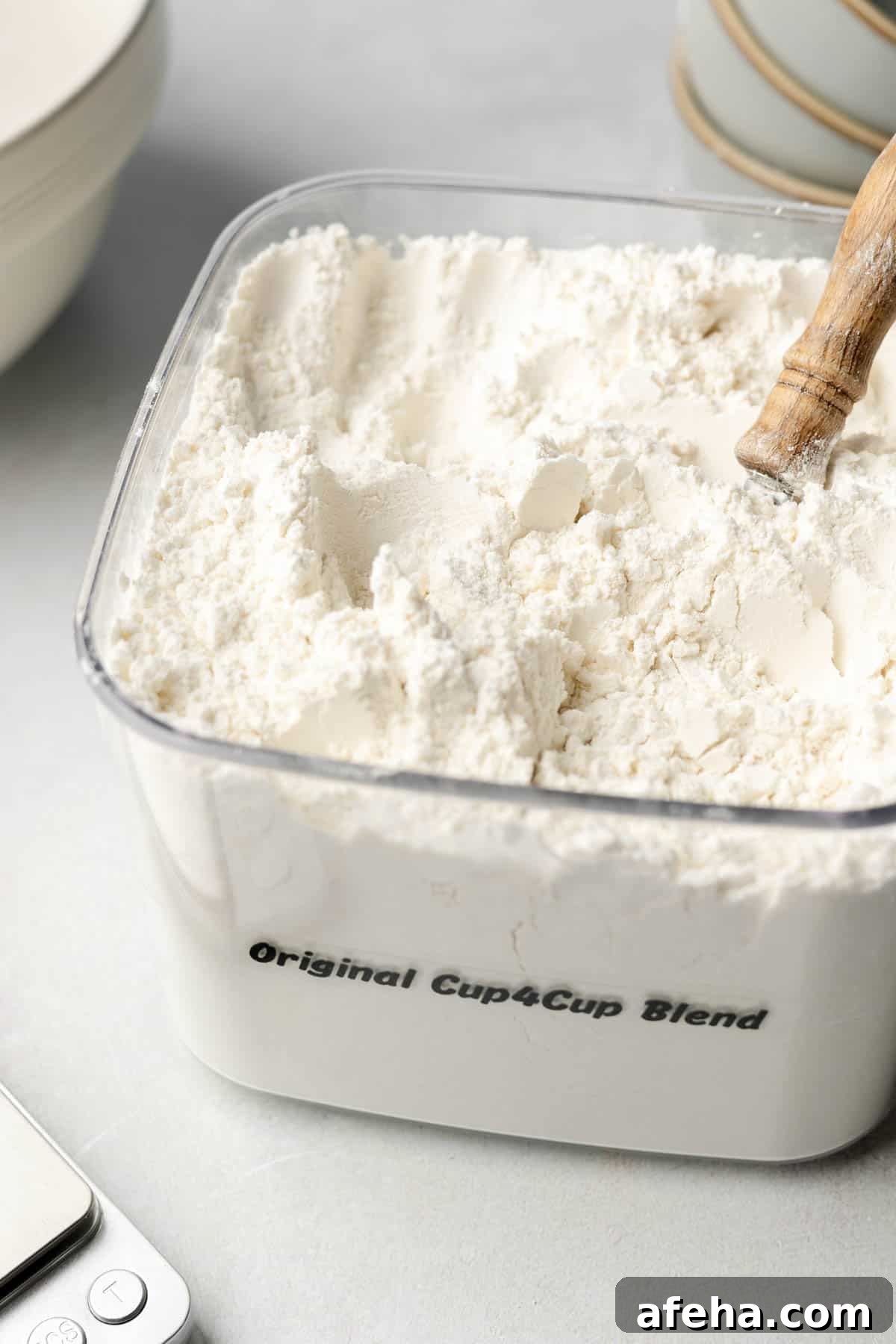
I’ve long appreciated the convenience of premixed gluten-free blends, and Cup4Cup used to be my reliable go-to for many recipes because of its consistently good results in pastries and pasta. When the brand changed its multipurpose blend in late 2024, removing milk powder and shifting the rice flour blend to be the first ingredient, many home bakers (myself included) noticed a difference and began experimenting to reproduce the original formula at home. Making your own blend gives you control over the ingredients and lets you avoid unexpected reformulations.
What Is Cup4Cup?
Cup4Cup was developed by chefs and intended to be a cup-for-cup substitute for wheat flour. The original multipurpose blend combined cornstarch, rice flours, and milk powder in a way that worked especially well for tender, flaky, and delicate gluten-free baking. That balance is what this homemade version seeks to replicate.
Changes to Cup4Cup Multipurpose Blend
In October 2024 the company reformulated its multipurpose blend, removing milk powder and positioning a rice flour blend as the first ingredient. While the brand states the changes should not affect performance, many bakers have found subtle differences. This recipe is intended to match the older formulation that included milk powder for richness and structure.
Why Consider a Homemade Blend?
Making your own gluten-free flour blend restores control over ingredients, allows for cost savings, and ensures consistent results in your baking even if commercial formulas change. You can adjust the blend for dietary needs—such as omitting milk powder for a dairy-free version—or tweak the ratio of rice flours and starches to match your preferred texture.
Recipe Testing Notes
This copycat was reverse-engineered with attention to ingredients and nutrition data to achieve a blend close to the original Cup4Cup multipurpose flour. I tested it in pie crusts, pasta, and biscuits. It produces comparable results for most recipes; pasta dough may need slightly more water. Use superfine rice flours to avoid a gritty texture—labels that specify “superfine” usually indicate a noticeably better mouthfeel.
Note (updated 12/23/24): I reduced the xanthan gum in the blend to about 2% because 3% proved too firm in some preparations. You can omit xanthan gum in the blend and add it per recipe if you prefer.
Simple Ingredients
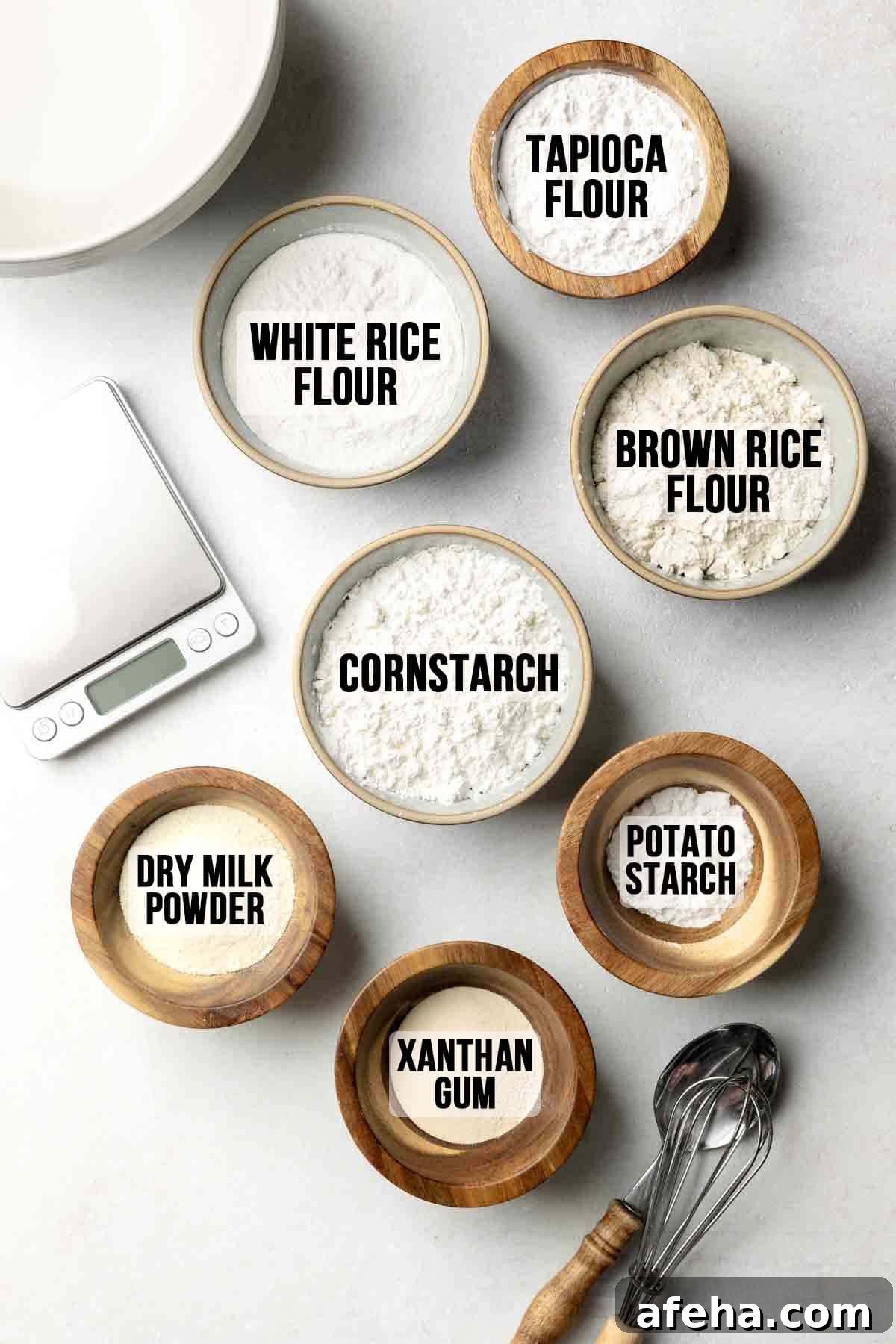
- Cornstarch: Lightens the blend and helps mimic the delicate texture of wheat flours, while contributing binding and thickening.
- White Rice Flour: Neutral in flavor and very light in texture. Use superfine white rice flour for the best results.
- Brown Rice Flour: Adds a touch of nuttiness and more fiber, contributing structure and a slightly heartier texture; superfine is best.
- Tapioca Flour (Tapioca Starch): Improves chew, helps bind, and retains moisture—useful for cakes and breads.
- Potato Starch: A light, fine starch that adds moisture without heaviness.
- Xanthan Gum: Provides elasticity and structure so gluten-free doughs and batters hold shape and trap air.
- Whole Milk Powder: Adds richness, improves browning, and helps with crumb structure. Omit for a dairy-free version or substitute with a dairy-free milk powder if desired.
Necessary Equipment
Use a digital kitchen scale for accurate measurements. Precision matters when blending gluten-free flours; this recipe is scaled by weight rather than cups for consistent results.
How to Make Cup4Cup at Home
Making the blend is straightforward: weigh, combine, and whisk.
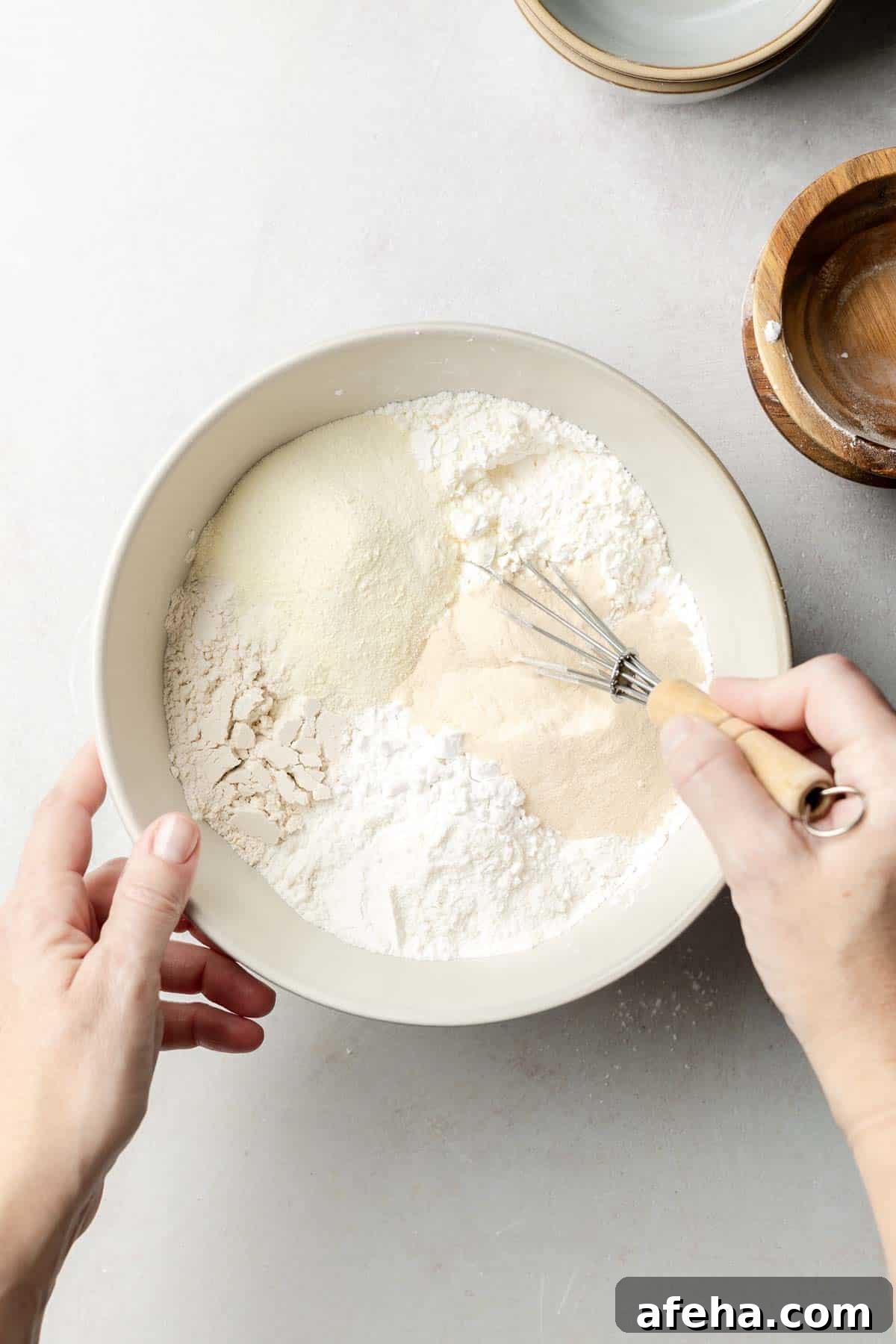
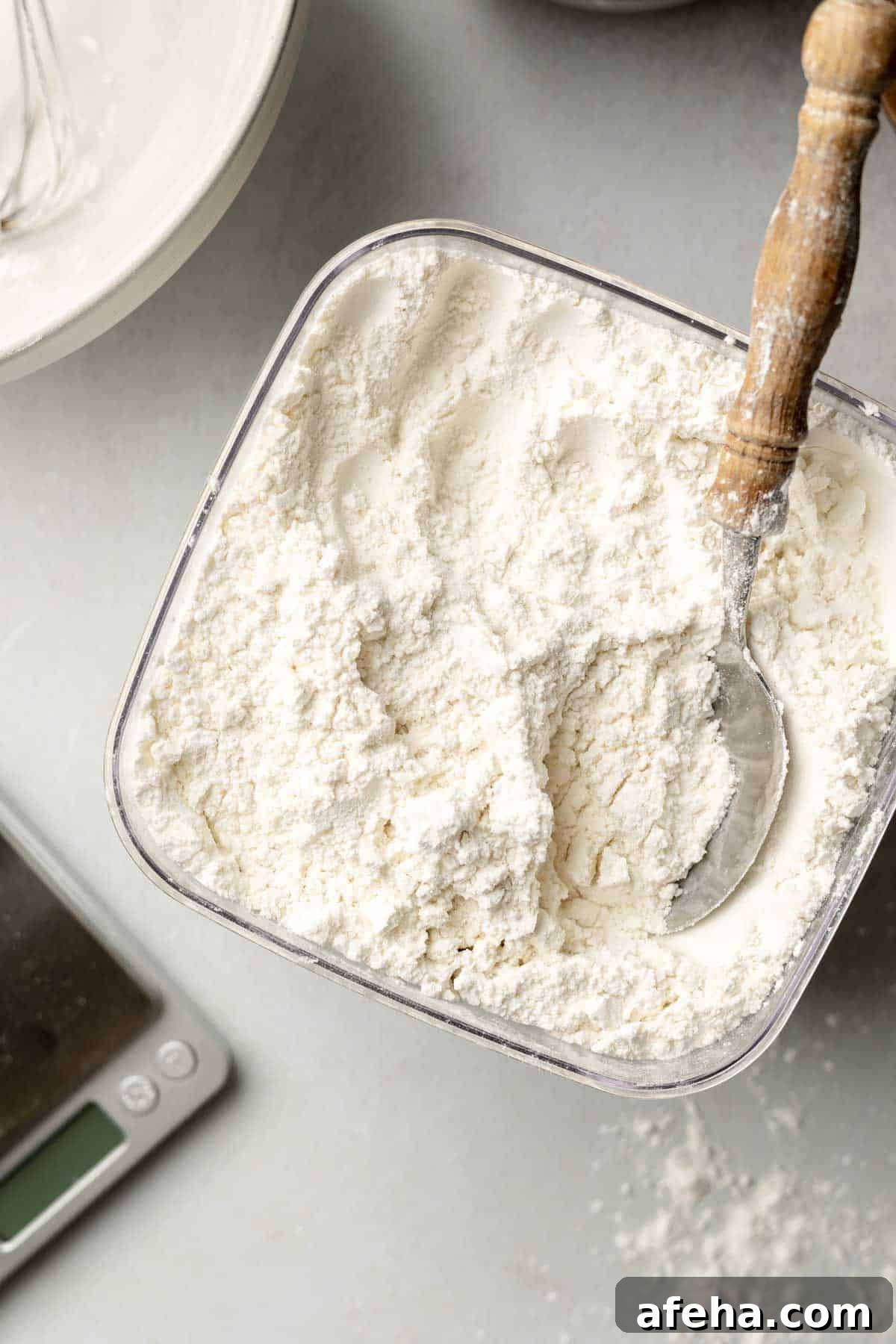
Measure each ingredient by weight into a large bowl, then whisk thoroughly until evenly combined. Transfer the finished blend to an airtight container, label it, and store in a cool, dry place. Refrigeration or freezing will extend shelf life.
Storage
Store the blend in an airtight container away from direct sunlight. At room temperature it will keep for several months; refrigeration or freezing will preserve freshness even longer. Label the container with the date and contents.
What To Make With Cup4Cup Flour
This blend is especially useful for tender baked goods: flaky pie crusts, light biscuits, delicate cakes, and even homemade pasta. It substitutes cup-for-cup for all-purpose flour in many recipes, but slight adjustments to liquid or xanthan gum may be needed depending on the specific recipe.
Top Recipe Tips!
Always whisk the blend well before use to redistribute flours and starches. For an extra-fine texture, pulse the combined blend briefly in a high-powered blender or grain mill designed for dry ingredients; this step can reduce grittiness and improve performance in delicate recipes.
Recipe FAQs
One cup of this blend weighs approximately 128 grams.
Yes. For a dairy-free version, omit milk powder or use a dairy-free milk powder alternative. If you avoid corn, arrowroot can replace cornstarch, though texture will vary. Any substitution may change the blend’s behavior, so test and adjust as needed.
This is a versatile all-purpose gluten-free blend that works well in cakes, cookies, biscuits, pie dough, and certain breads. It also produces a smooth roux for sauces and is convenient for recipes that expect a cup-for-cup wheat flour replacement.
Recipe
Cup4Cup Gluten-Free Flour Blend (Copycat Recipe)
Ingredients
- 140 g Cornstarch
- 100 g White Rice Flour (superfine)
- 100 g Brown Rice Flour (superfine)
- 45 g Tapioca Flour
- 20 g Potato Starch
- 30 g Milk Powder (omit or substitute for dairy-free)
- 9 g Xanthan Gum (about 2% of the total blend; omit if preferred)
Instructions
- Weigh each ingredient accurately into a large bowl using a digital kitchen scale.
- Whisk thoroughly until completely combined and uniform in texture.
- Transfer to an airtight container, label with date and contents, and store in a cool, dry place. The blend will keep for several months at room temperature and longer if refrigerated or frozen.
Notes
Yield: Approximately 1 pound of flour blend. One serving is roughly 28–32 g (~1/4 cup by volume). Adjust batches as needed.
If a recipe’s texture seems off, small adjustments to liquid or xanthan gum can help achieve the desired consistency.
Estimated Nutrition (per 32 g serving)
Calories: 120 kcal • Carbohydrates: 26 g • Protein: 2 g • Fat: 1 g