Slow cookers are convenient: you come home after a long day and dinner is ready. Home-cooked meals save time and money, and there’s an even more efficient option — the thermal cooker.
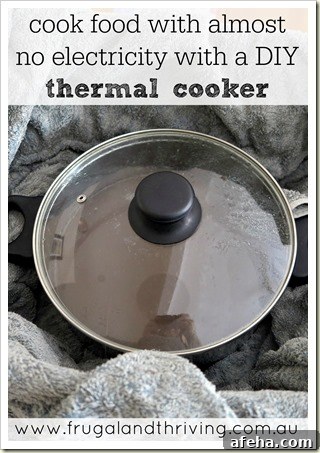
Thermal cookers use minimal electricity. After an initial period of heating, they require no power at all. The principle is simple: bring food to a boil on a conventional stove, then remove it from direct heat and place it in an insulated container so it continues to cook using retained heat.
This technique has been used for centuries around the world, particularly where fuel is costly. Historically, people insulated pots with hay, grasses, moss, dry leaves, water, or even buried them in earth. Today you can accomplish the same effect with blankets, towels, or purpose-built insulation.
The trapped heat allows food to cook slowly and evenly without constant attention, saving fuel and time. Unlike solar cooking, thermal cooking works regardless of weather. Prepare oats or beans in the evening and wake to porridge or tender legumes in the morning, without continuous electricity use. Thermal cooking is also useful when camping or during power outages, conserving stove fuel.
While commercial thermal cookers are available, they can be expensive. You can create an effective DIY thermal cooker with common household items at no cost and enjoy the same benefits.
DIY Thermal Cooker
To build a simple thermal cooker you need only an empty laundry basket, a cardboard box, or an esky, plus spare towels, blankets, or an old pillow.
Line the bottom of the basket or box with a blanket or pillow, place the hot pot inside, and wrap it in a towel. Fill the sides and top of the container with additional blankets or towels to minimize heat loss. Proper insulation at the top is important because heat escapes upward.
This makeshift setup can be remarkably effective. For example, beans brought to a boil and placed in a well-insulated container can remain steaming and fully cooked even after 12 hours of passive cooking.
How to use your thermal cooker
Start with simple recipes while you learn how your thermal cooker performs. Beans are an excellent choice. Bring food to a rolling boil, then simmer briefly: beans typically need 2–4 minutes, while meats often require 10–15 minutes. Your goal is to ensure every piece reaches an internal temperature of at least 60°C so it is hot throughout.
After boiling, place the lid on the pot, turn off the heat, and set the pot immediately into your insulated container. Seal and insulate well, then allow the food to continue cooking for 6–12 hours depending on the recipe and the quantity.
A thermal cooker functions like a slow cooker but without ongoing power, making it portable and ideal for situations where electricity is limited. It operates similarly to a large meal flask, maintaining temperature and finishing the cooking process gently.
Using a thermal cooker helps you save both time and energy. You don’t need to buy a specialized appliance; a DIY version made from household items will perform admirably.
Have you tried thermal cooking? What have you prepared in your thermal cooker?
If you want more tips on saving time and money in the kitchen, consider looking into meal planning and efficient cooking techniques to complement thermal cooking.