Have you ever wondered what the difference is between a levain and a sourdough starter?
When baking sourdough, recipes often call for a sourdough starter, but some will use the term levain. Both are used to leaven bread, yet they have distinct roles and characteristics that are useful to understand.
Both levain and starter can produce great sourdough, but each offers different advantages. Understanding how they’re made and when to use each one will help you bake with more control and consistency.
In this article we explain what a sourdough starter and a levain are, how they differ, and how they relate to preferments. These practical distinctions will help you decide which approach suits a particular recipe or bake.
What Is A Sourdough Starter?
A sourdough starter is a living culture of wild yeast and lactic acid bacteria created by fermenting flour and water. Over days and weeks, these microorganisms establish a stable community capable of producing gas and developing flavor, which helps bread rise and gives sourdough its characteristic taste.
Starters can be maintained with many different flours, though many bakers choose to consistently feed their starter with the same flour to keep its character stable.
With regular feeding and appropriate storage, a sourdough starter can be kept indefinitely. It serves as the ongoing “mother” culture from which you can take portions to build preferments for baking.
What Is A Levain?
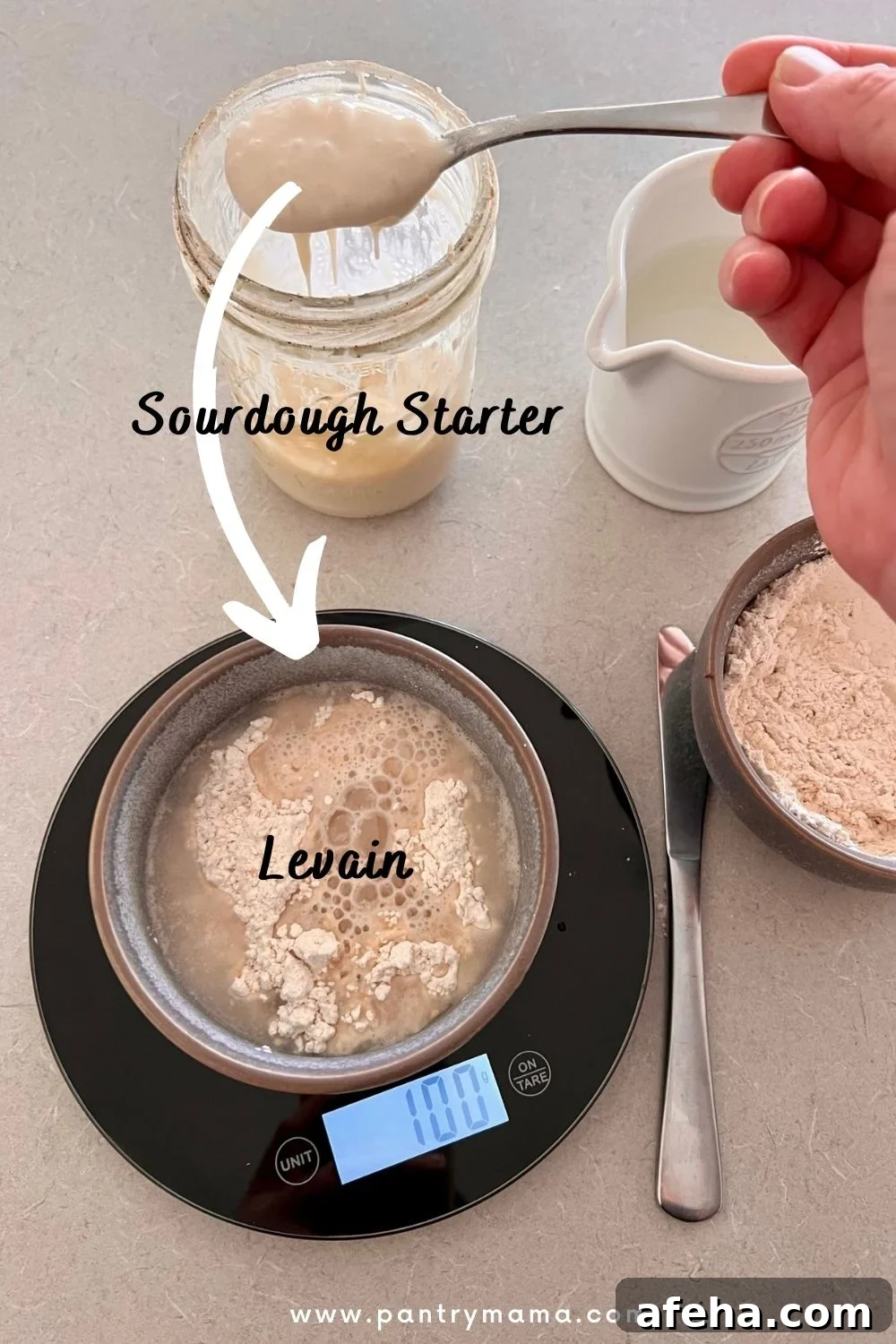
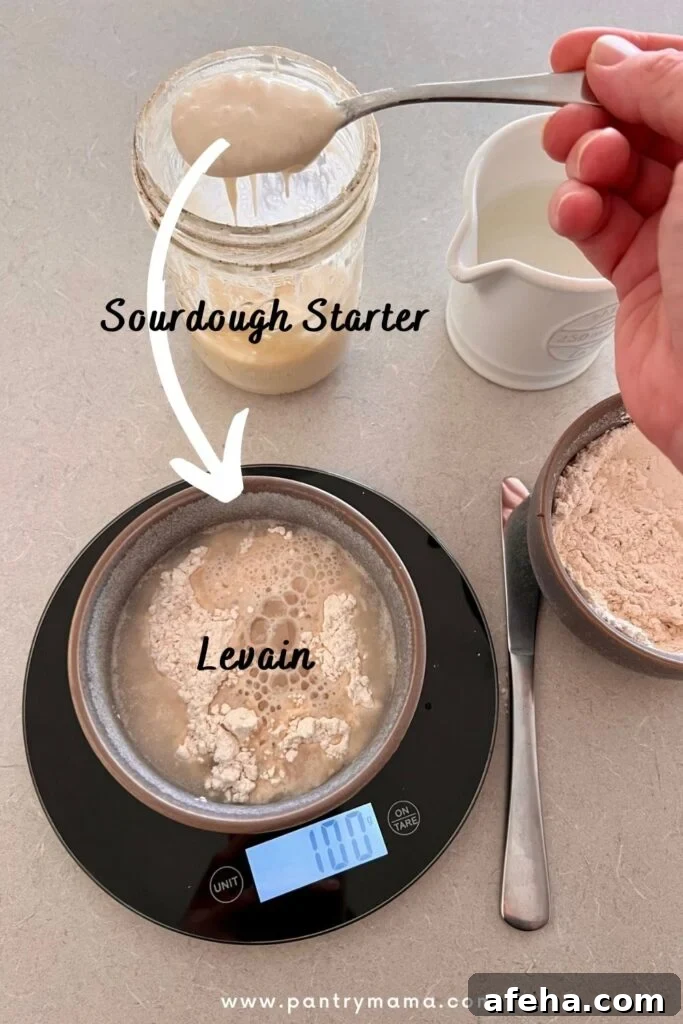
A levain is essentially a portion of your sourdough starter that has been fed and expanded to a larger volume for a specific bake. You take a small amount of starter and feed it with fresh flour and water to create a levain sized for the recipe—anywhere from a few dozen grams to several hundred grams depending on need.
The word levain is French for sourdough, and in English it relates to the term leaven. A levain is a fresher, larger offshoot of your starter and is typically used once in a dough rather than maintained indefinitely.
Because a levain is revived and fed immediately before use, it tends to taste less acidic and more lively than the long-maintained starter. You can customize a levain’s hydration and flour composition to better match the bread you plan to bake.
Why Build A Levain When You Already Have a Sourdough Starter?
There are several practical reasons to build a levain from your starter:
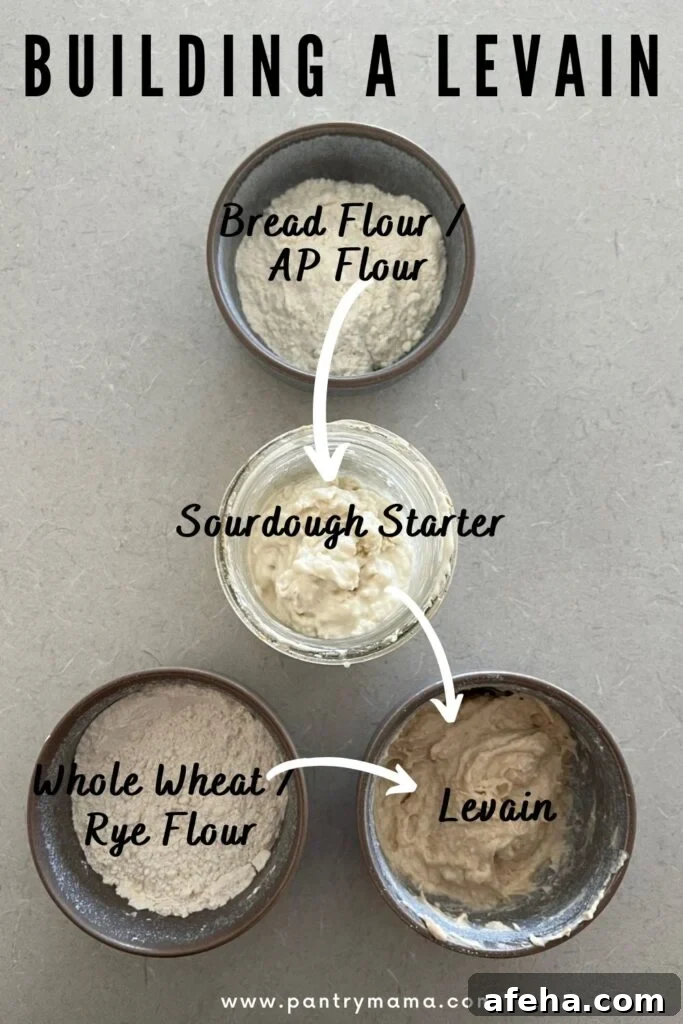
- Use a different flour for the levain than the one you maintain in your starter.
- Keep a smaller “mother” starter in the fridge and only build a levain when you want to bake.
- Experiment with additions or different flours without risking your main starter.
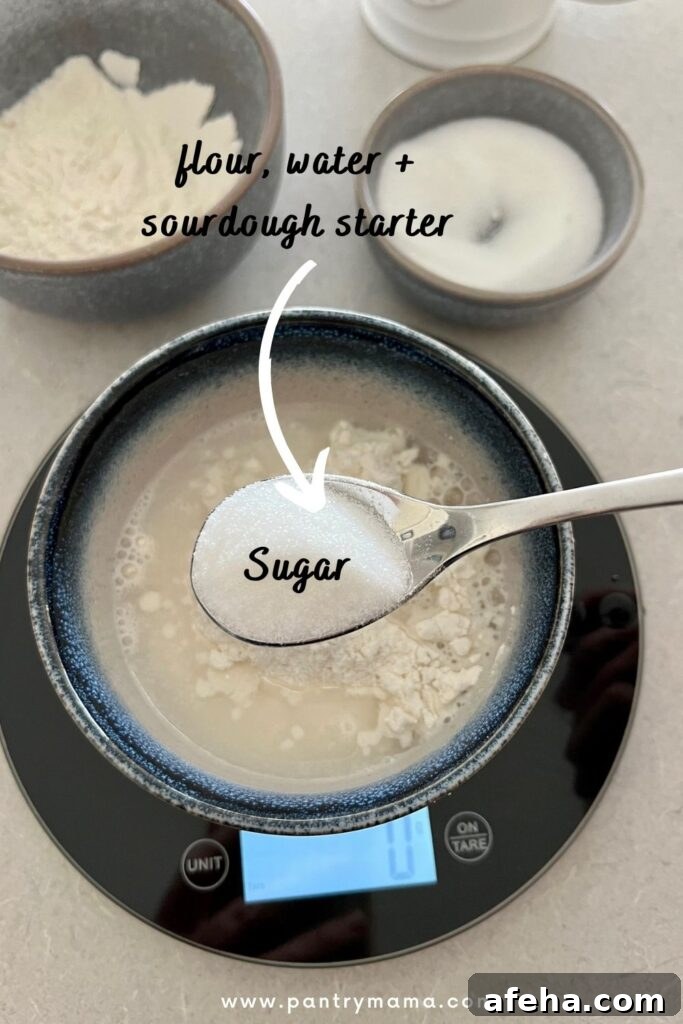
- Create a sweeter levain for enriched or fruit breads by adding sugar or honey.
Using Different Flour to Your Starter
If you plan to bake with whole wheat or rye, building a levain with those flours can improve fermentation behavior and flavor in the final loaf. For example, you might mix 20 g of starter with 40 g whole wheat, 40 g rye and 80 g water to create a levain tailored to that recipe, while keeping your primary starter unchanged in the fridge.
Keeping Sourdough Starter In The Fridge
Many bakers maintain a small starter in the refrigerator for convenience. When it’s time to bake, they remove a portion, feed it to create a levain, and use the levain in the dough. This approach reduces the frequency of feeding the main starter while giving you an active preferment for baking.
Experimenting With Sourdough Starter Using a Levain
Using levains is a low-risk way to experiment. Try different flours, hydration levels, or liquids (like whey) in a levain to see how your starter responds without altering the long-term health of your main starter.
Make A Sweet Sourdough Levain
A sweet levain is made by adding a small amount of sugar, honey, or another sweetener to the flour and water used to build the levain. This can be helpful in enriched or fruit breads where a touch of sweetness improves flavor and fermentation. Note that sugar is typically not part of a maintained starter, but it can be used in a levain built for a particular recipe.
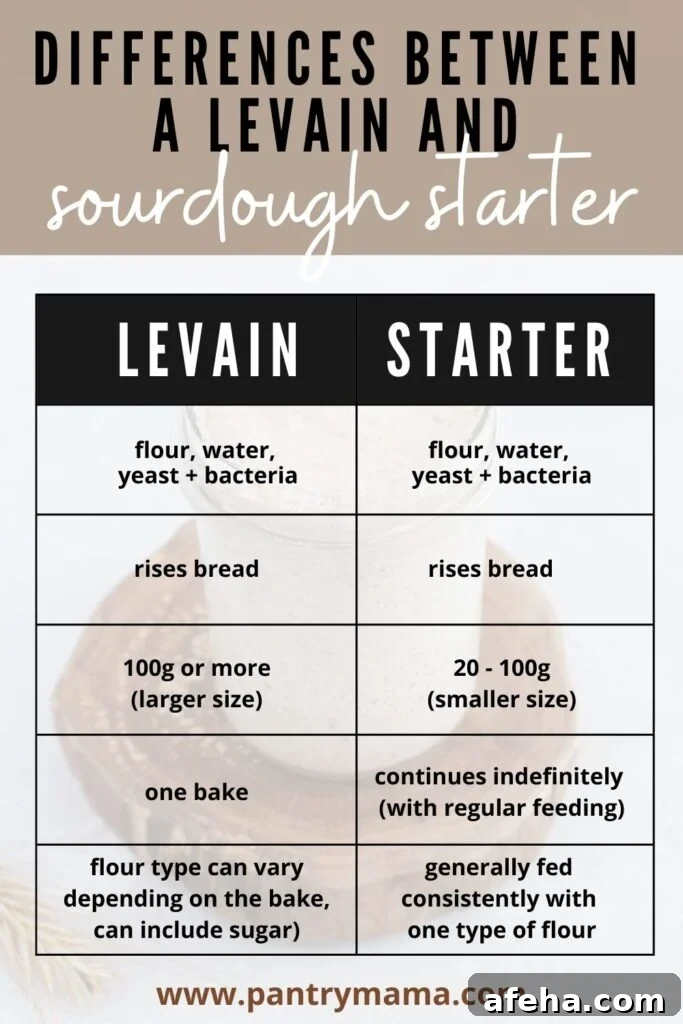
The Differences Between A Levain And A Sourdough Starter
| LEVAIN | SOURDOUGH STARTER | |
| WHAT’S IN IT? | Flour, water, wild yeast, and bacteria | Flour, water, wild yeast, and bacteria |
| WHAT DOES IT DO? | Leavens bread (used in a bake) | Leavens bread (ongoing culture) |
| SIZE | Larger, typically 100 g or more for a bake | Smaller maintained quantity, often 20–100 g |
| LIFETIME | Used for a single bake | Kept indefinitely with regular feeding |
| TYPE OF FLOUR | Can vary depending on the bake; may include sugar | Usually fed consistently with one main flour type |
The primary distinctions are size and intended lifetime. A levain is scaled up for immediate use and discarded or mixed into dough after the bake, whereas the sourdough starter is the persistent culture you maintain over time. Levains also offer flexibility in flavor and hydration, allowing you to reduce sourness or better match the flour mix of a particular recipe.
What Is A Preferment?
A preferment is any mixture of flour, water, and a leavening agent that is allowed to ferment before being added to dough. Preferments develop flavor, improve dough handling, and contribute to the final loaf’s texture. Both levain and sourdough starter are types of preferments; others include poolish and biga, which may use commercial yeast rather than wild yeast.
Fermentation time is key: it produces organic acids and alcohols that build flavor and aroma, while the yeast activity contributes to dough rise.
In practice, levain and starter both leaven bread, but they are used differently. A levain is a single-use preferment you can tweak for a recipe; a starter is the long-term culture you maintain. Use your starter as the foundation, and build levains from it to expand your baking options while preserving the health and character of your main culture.
Want More Info?
If you want to explore further topics related to sourdough, consider reading about differences between commercial yeast and wild sourdough cultures, whether to make or buy a starter, where the yeast in starters originates, and tips for strengthening a starter. These topics will help deepen your understanding and refine your baking technique.