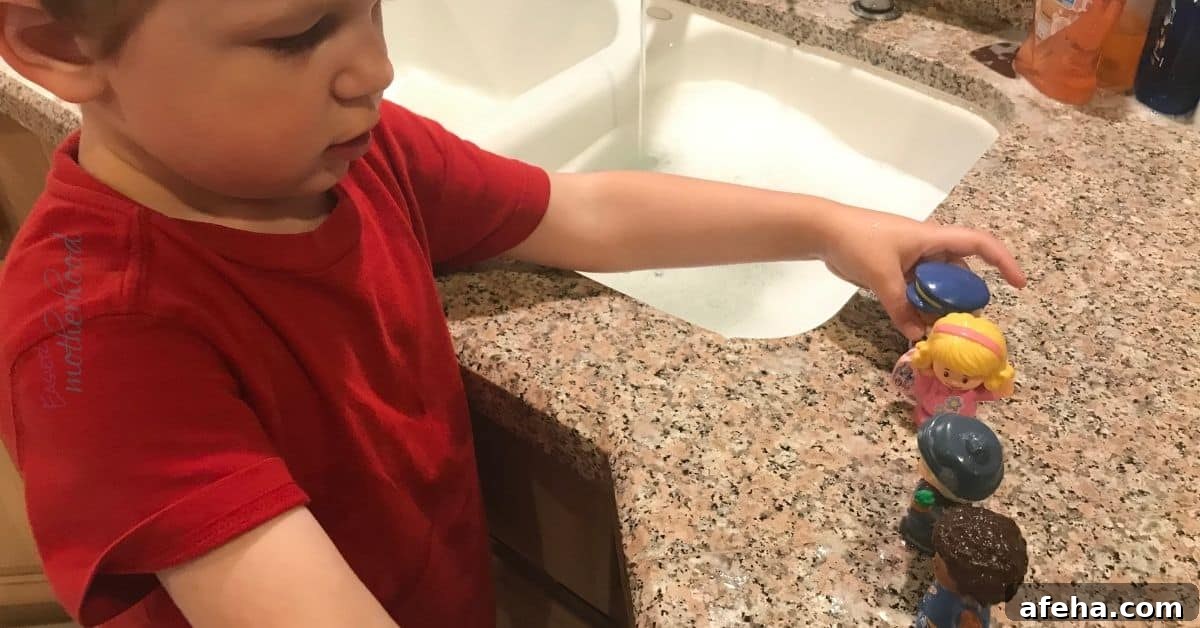
Sensory Play in the Sink: A Simple, Fun Way to Explore Water
Sensory play offers children a hands-on way to explore their world through touch, sight, and movement. It supports motor skill development, encourages curiosity, and makes learning feel like play. While sensory bins are wonderful, once a child can reach the sink with a stepstool, the sink itself becomes a perfect, contained sensory space—no extra bin required.
This post contains affiliate links, which means I receive a small commission, at no additional cost to you, if you make a purchase using this link.
Outdoor water tables are great for warm weather, but they aren’t always practical. In winter it’s too cold to play with water outside, and hot climates can make outdoor play uncomfortable. The kitchen or bathroom sink provides a convenient, year-round alternative that’s easy to set up and clean up.
What toys work best for sink sensory play?
Sensory play doesn’t require elaborate equipment. Use small, solid toys that won’t trap water inside—plastic figures, small boats, or sturdy farm animals work well. Avoid toys with holes or seams where water can get in, since trapped water can lead to mold.
Bring a sink plug, a splash of mild dish soap or bubble bath, and optional food coloring for extra imagination. If you want more bubbles, fill the sink using the sprayer rather than the regular stream. A few drops of blue food coloring can turn the sink into a little ocean for toys to swim in.
Remember: sensory play should be child-led. If your child prefers splashing, popping bubbles, or experimenting with water flow instead of pretending to bathe toys, follow their lead. That play is valuable learning too.
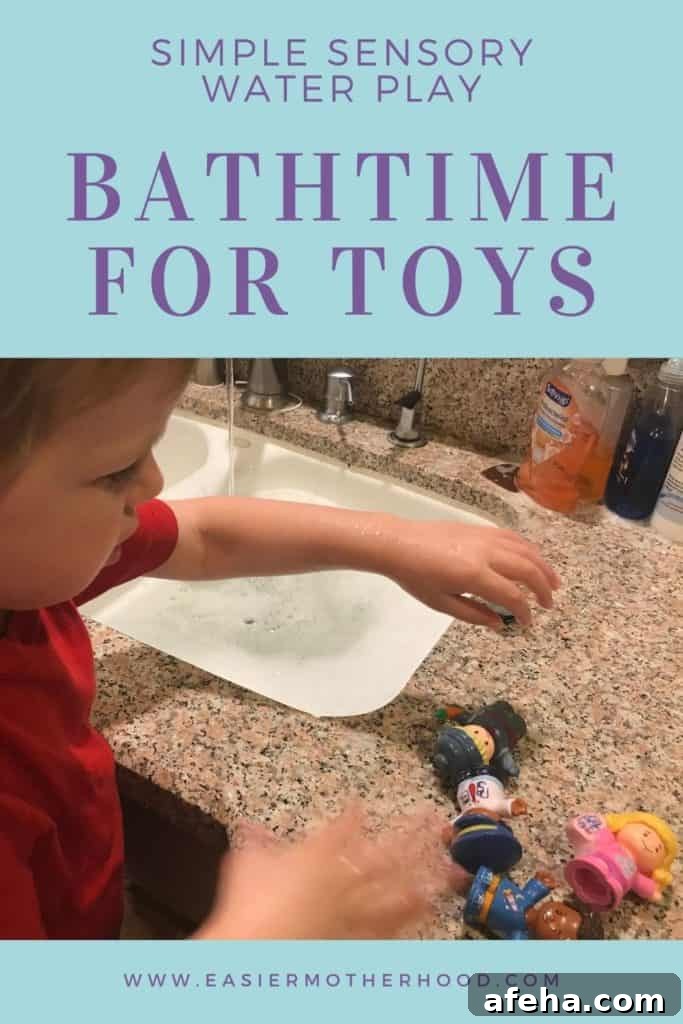
What can a child learn from giving toys a bath?
Simple sink play supports several types of learning. It introduces concepts of hygiene in a playful way and can help children who dislike bathtime get more comfortable with water and different textures. Low-pressure, enjoyable experiences with water can build trust and make other water-related activities feel safer.
Sink play also teaches cause-and-effect and basic science concepts like buoyancy. Kids notice which items float and which sink, and can experiment with why that happens. Some objects float at first but fill with water and sink later—showing how materials and shape influence behavior in water. Common household items, like an empty water bottle, can be used to demonstrate these ideas.
Other benefits of sensory play in the sink
Sensory play encourages exploration and investigation, helping to build neural connections important for development. It fosters attention and focus by allowing children to engage deeply with hands-on activities. In addition, manipulating objects in water helps build both gross and fine motor skills—scooping, pouring, grasping, and releasing all get practiced during sink play.
Simple sink sensory activities
Scooping and pouring: Provide a ladle, measuring cups, or a slotted spoon so children can scoop items out of the water. Make sure scoops are an appropriate size for the objects you include.
Sink or float game: Ask your child what they think will happen before they place an item in the water. Guessing and testing builds early scientific thinking.
Color play: Add a few drops of food coloring to transform the water. Blue can become an ocean, red can become a planet surface for space toys, and mixing colors introduces basic color theory.
Falling water: Give small cups or a colander with holes so children can pour and watch the water fall. This introduces sensory feedback and the joy of cause-and-effect.
Tips and safety
Always supervise water play closely—even shallow water can be hazardous for young children. Use warm, comfortable water, and keep soap mild to avoid irritation. Dry toys and the sink area after play to prevent mold and slips.
If you enjoyed this activity, consider other simple sensory setups like a dry oats bin for tactile exploration and early food play.
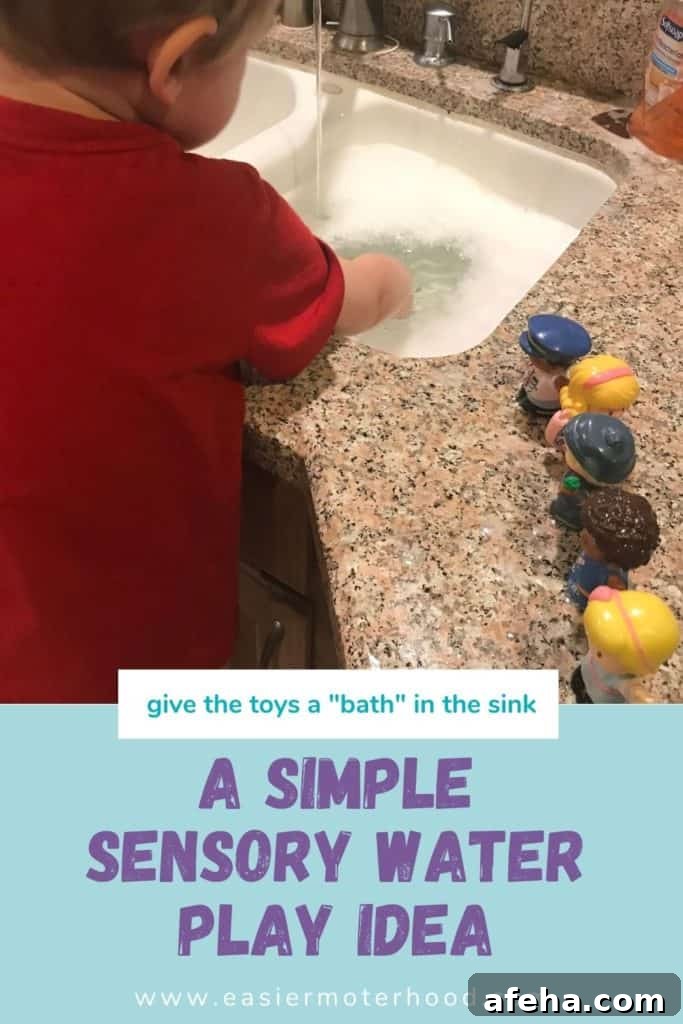
What’s your favorite way to do sensory play in the sink?
Share ideas and adaptations that worked for your child—simple variations often spark the most creative play.