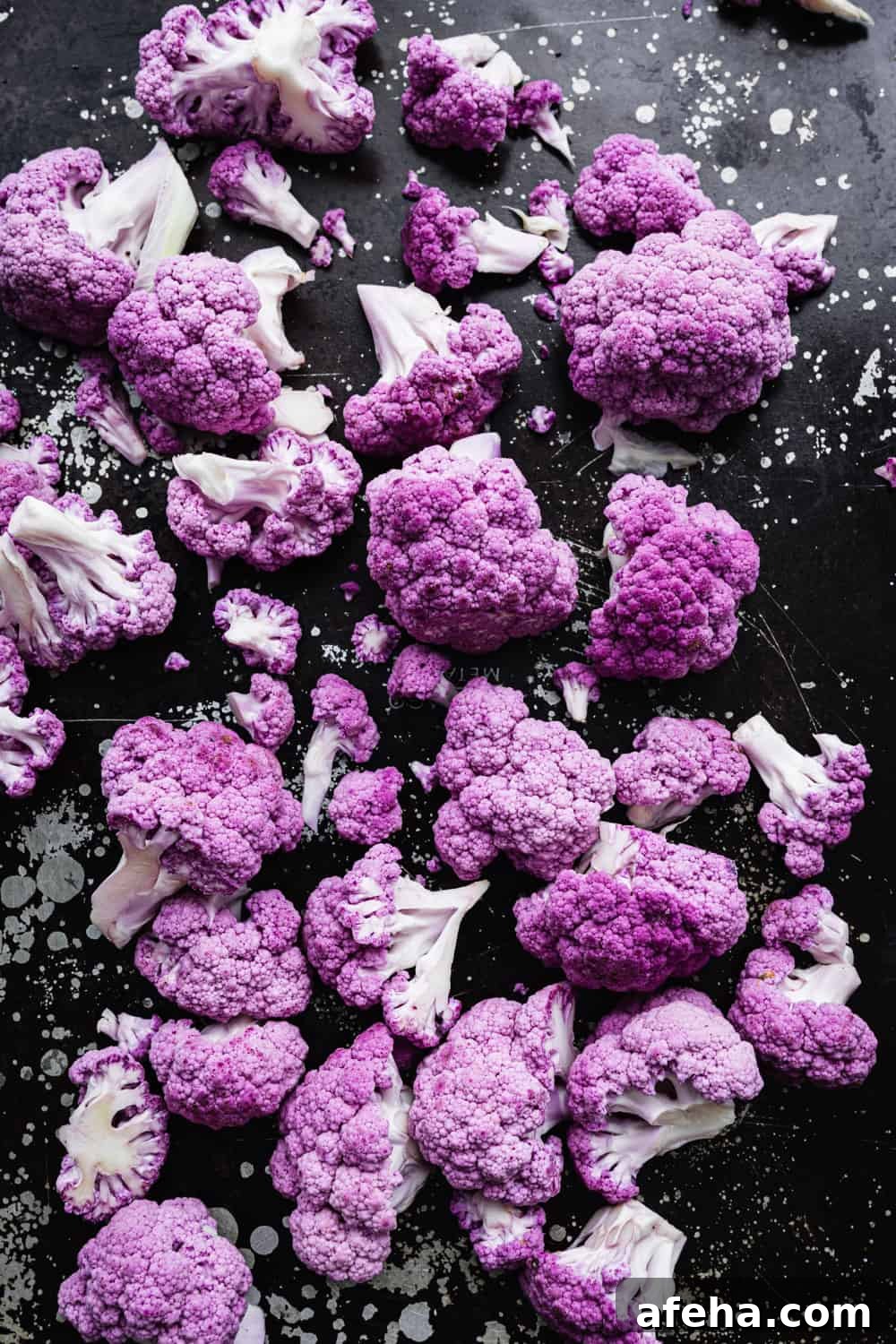
Purple cauliflower is a naturally colorful variety of cauliflower with a deep violet hue and a mild, slightly nutty flavor.
Think of it as the antioxidant-rich, more visually striking sibling of classic white cauliflower.
This guide explains its origins, what gives it that vivid purple color, the common varieties you’ll find, and practical tips for cooking and storing it so you can enjoy its color and flavor in the kitchen.
What is Purple Cauliflower?
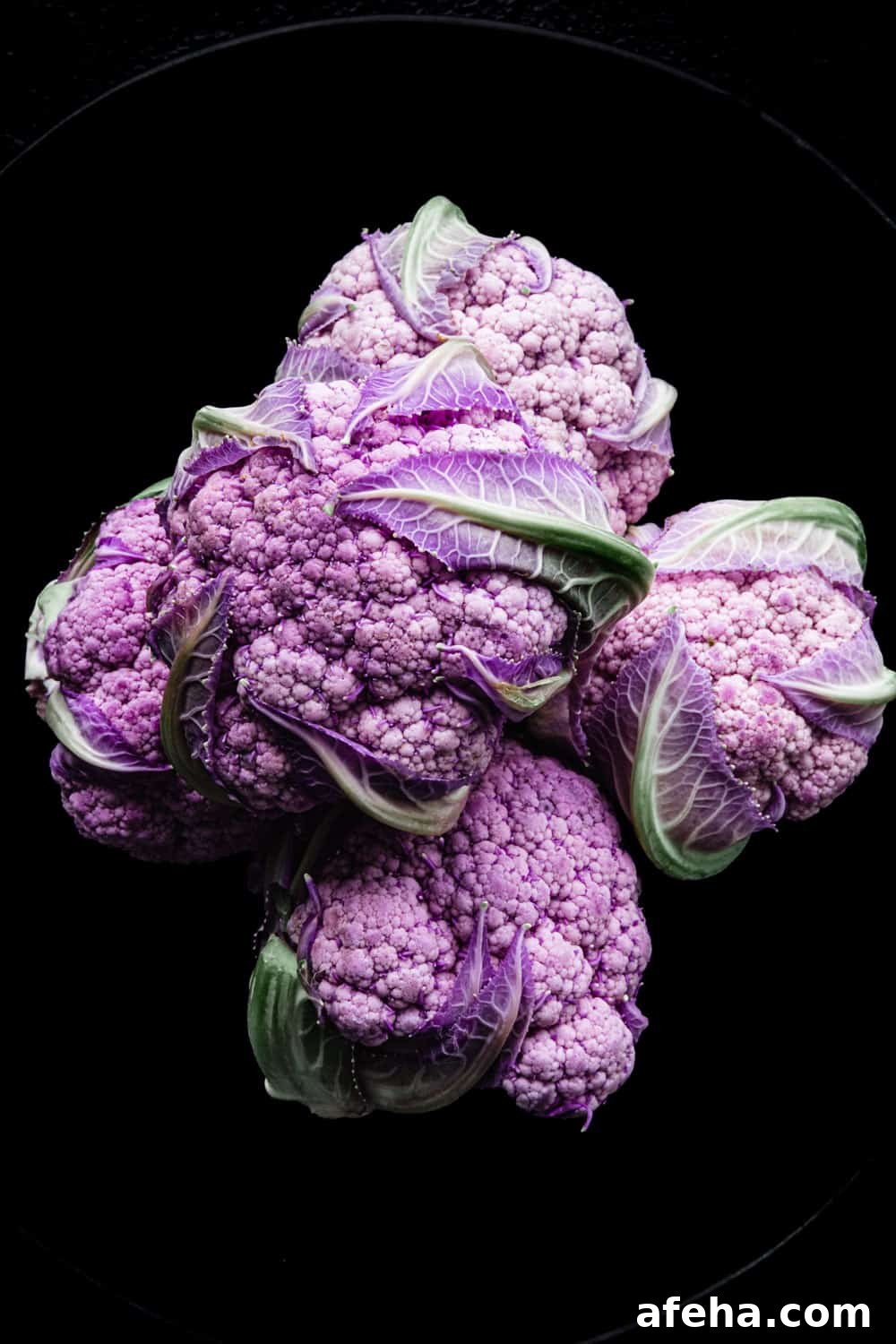
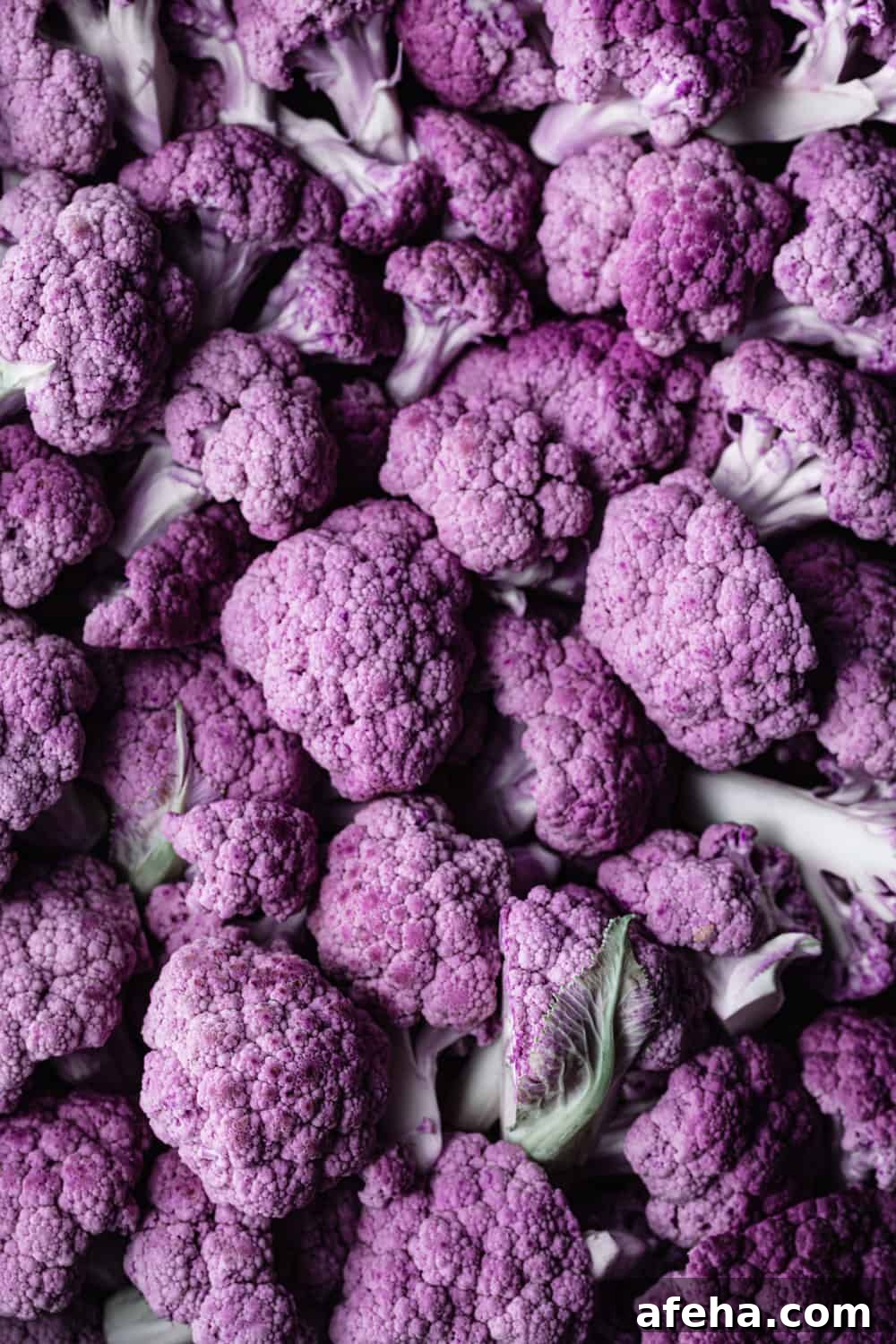
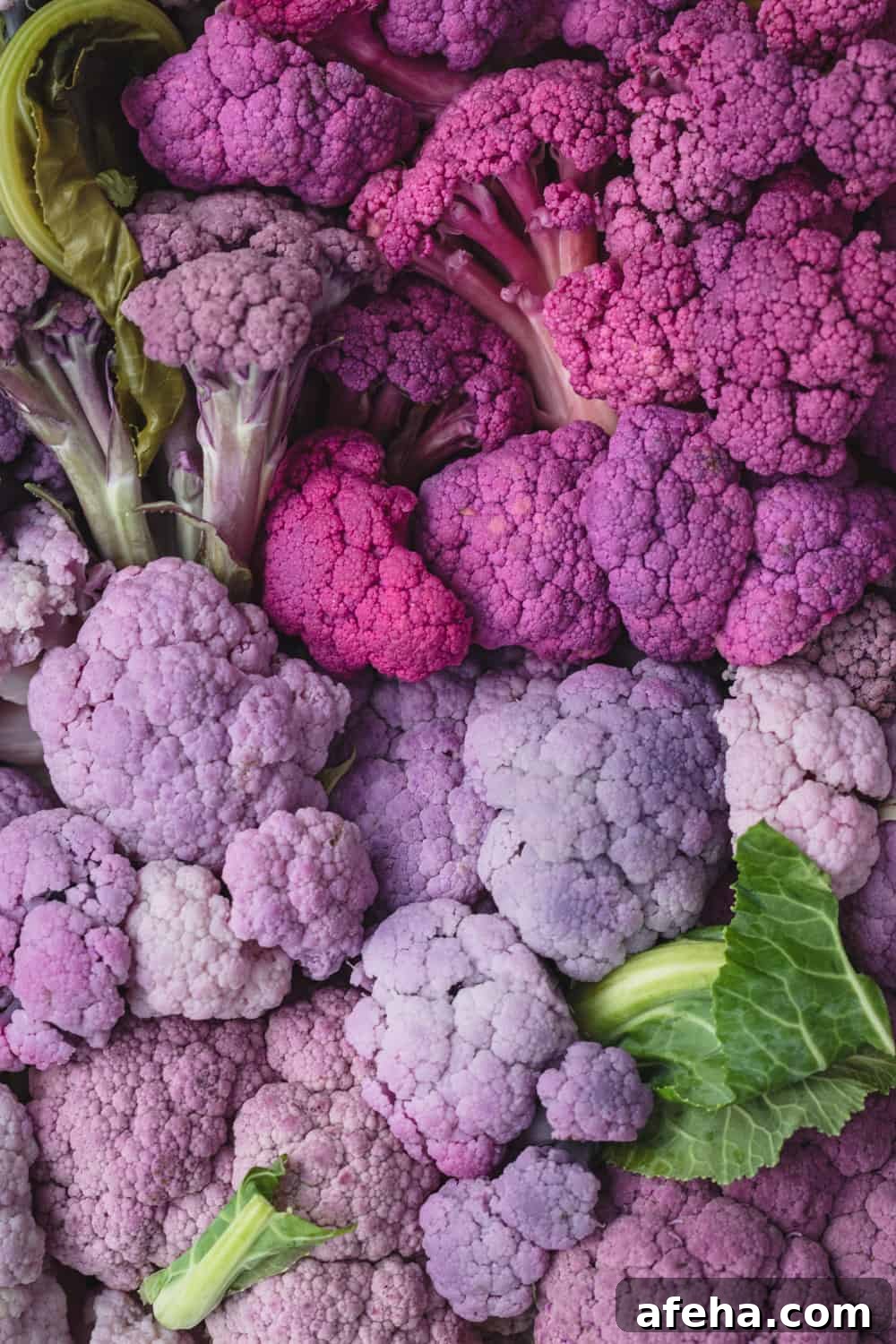
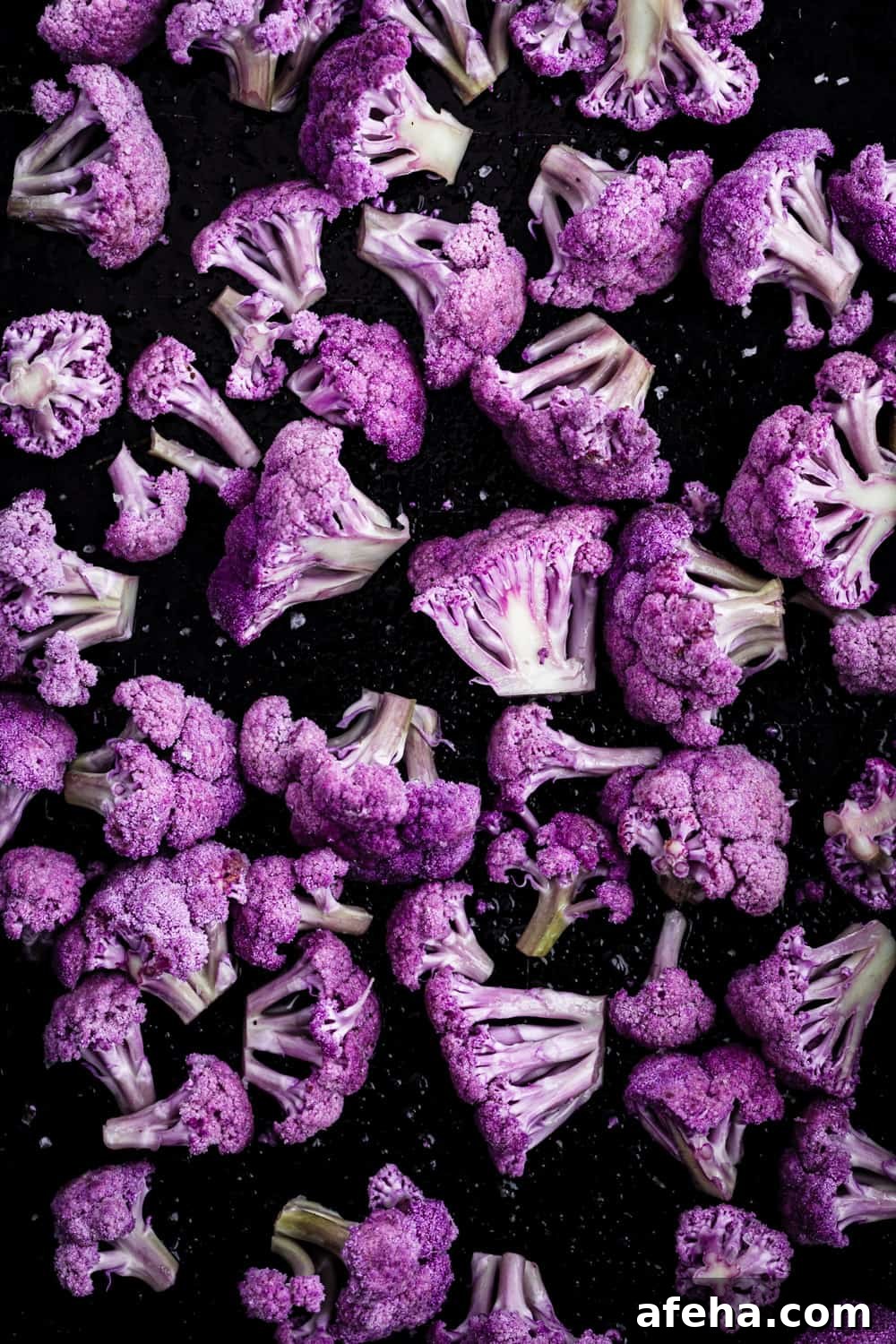
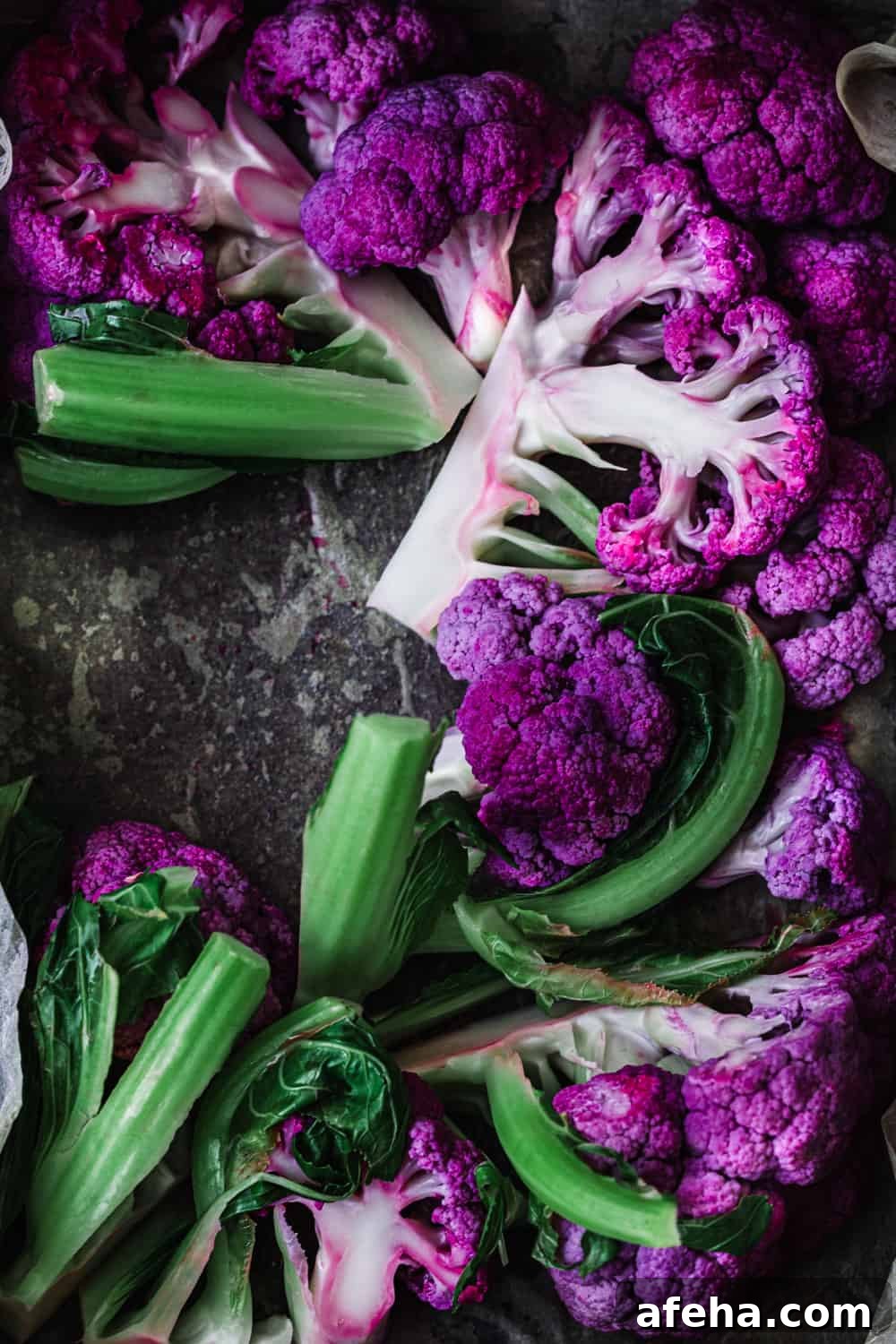
Purple cauliflower is simply cauliflower whose edible head (curd) develops purple pigmentation. Shades range from pale lavender to deep violet depending on variety and growing conditions.
Common varieties include Sicilian Violet, Violet Queen, Purple Cape and Mulberry Cauliflower. Each carries the same mild, slightly sweet cauliflower flavor; the main difference is the visual impact of the color.
The intensity of the purple depends in part on sunlight exposure during growth—more light often produces richer color—but variety genetics determine the potential range of hues.
Scientifically & Botanically
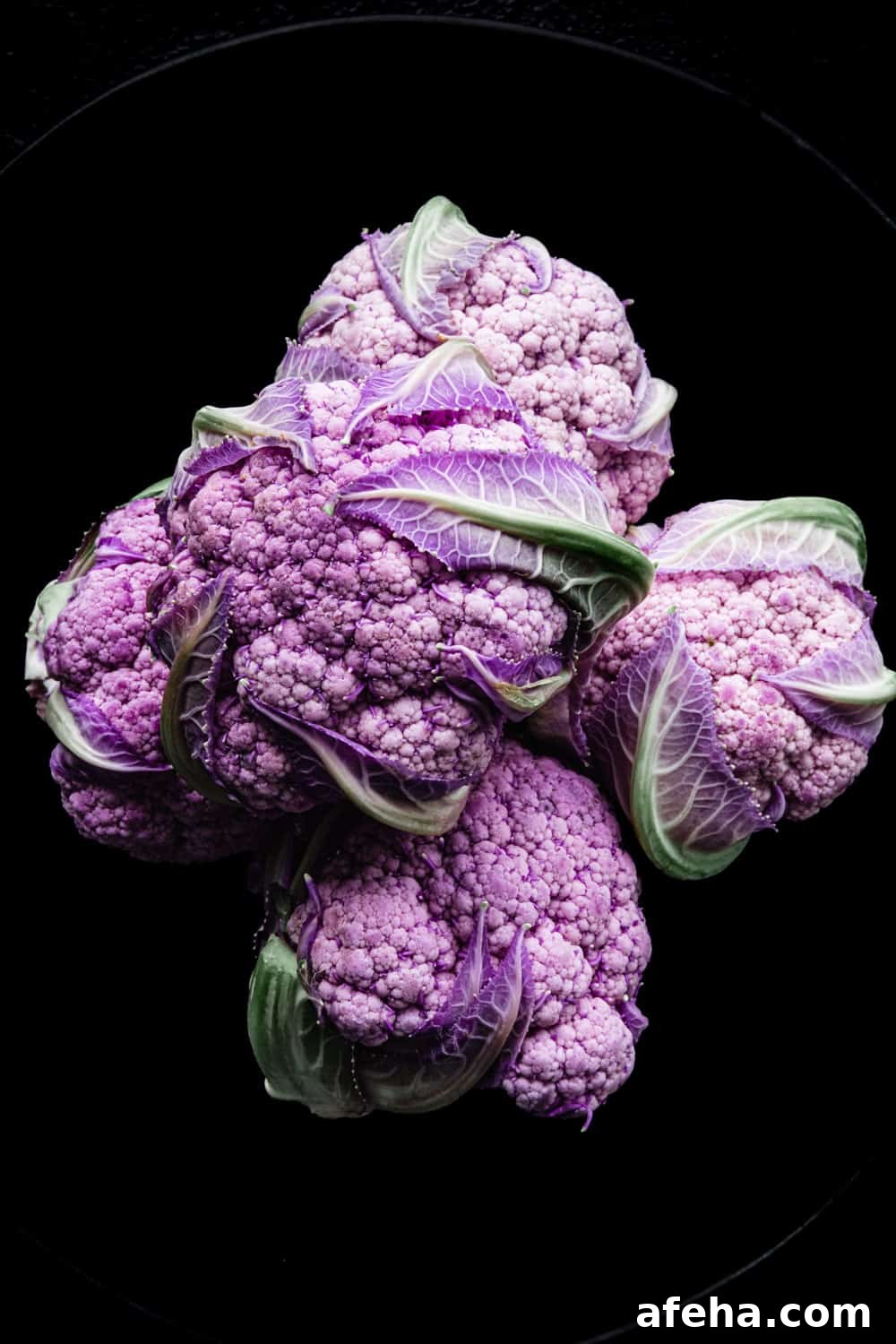
Purple cauliflower is botanically Brassica oleracea var. botrytis, part of the Brassicaceae (cruciferous) family. It is the same species as white cauliflower—just a naturally pigmented cultivar.
Like other Brassica oleracea cultivars, purple cauliflower is closely related to broccoli, kale, cabbage and Brussels sprouts. All are different selections of the same wild mustard ancestor.
What Makes Purple Cauliflower Purple
The vivid color comes from anthocyanins—natural pigments that produce red, purple and blue tones in many fruits and vegetables. Anthocyanins are also antioxidants, so the purple color signals additional phytonutrients.
Other vegetables that owe their color to anthocyanins include purple potatoes, red okra and purple kale. While there are many plant pigments overall, anthocyanins are the group responsible for those violet tones.
Because anthocyanins offer antioxidant benefits, purple cauliflower not only looks striking but can contribute to a nutrient-rich diet.
Cauliflower Colors & Their Pigments
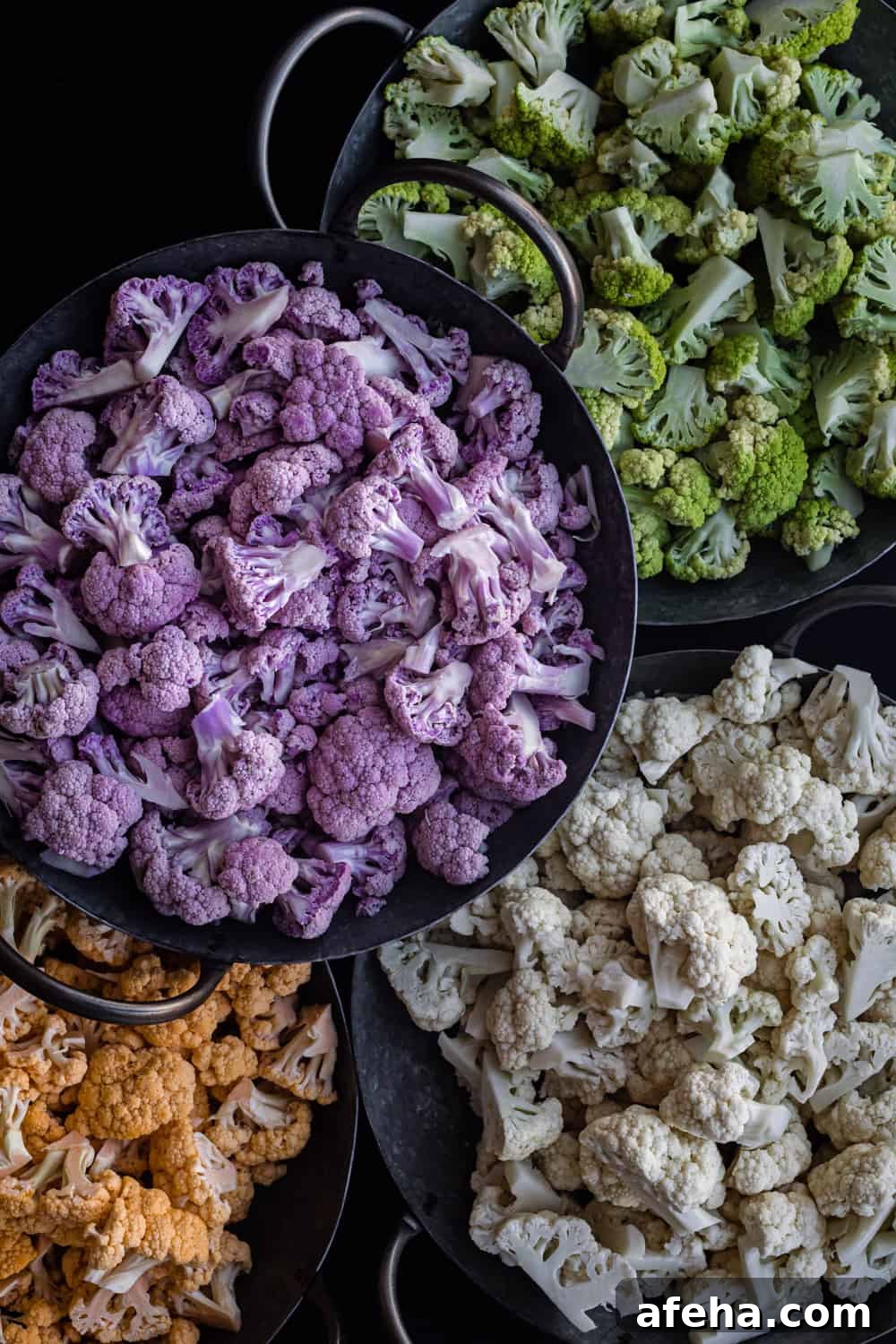
Different cauliflower colors reflect different pigments:
Purple → anthocyanins
Orange → carotenoids
Green → extra chlorophyll
These colored varieties were developed through traditional plant breeding rather than genetic modification.
Purple Cauliflower History
Purple cauliflower arose through traditional crossbreeding and natural mutation rather than laboratory modification. Cauliflower itself traces back to the northeastern Mediterranean where early cultivated forms were mostly white.
Over centuries cauliflower spread through Europe and beyond. Colored varieties such as orange and purple emerged more recently after growers selected plants with desirable pigments. Orange cauliflower was identified in Canada in the 1970s and, through breeding, became commercially available. Purple varieties followed as breeders selected for anthocyanin-rich heads.
Today purple cauliflower is grown commercially in many regions and is a common specialty item at farmers markets and grocery stores during its peak season.
What Does Purple Cauliflower Taste Like?
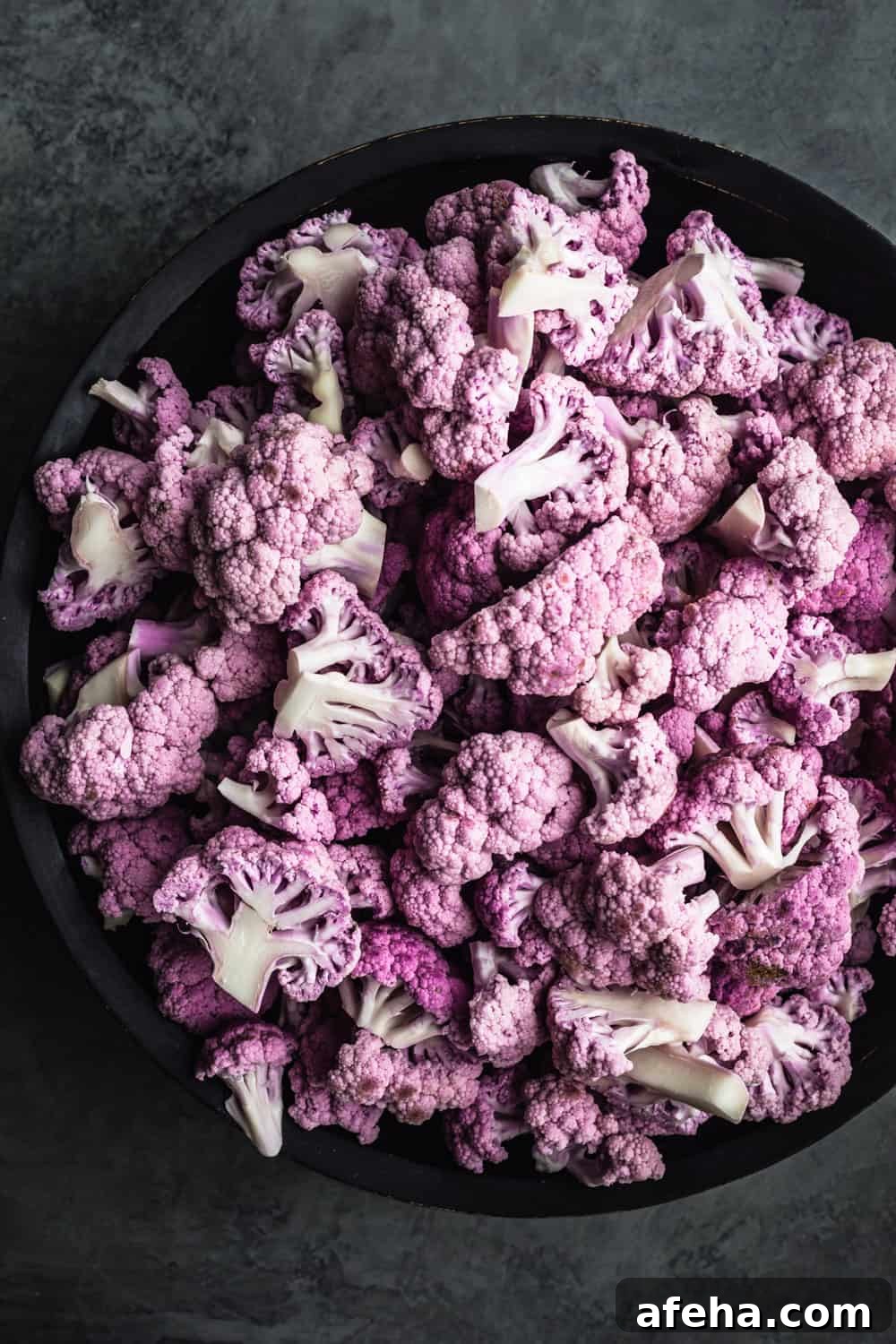
Flavor-wise, purple cauliflower is essentially the same as white cauliflower: mild, slightly sweet and subtly nutty. The main difference is visual—its color adds appeal to dishes without changing the familiar taste.
Cooking with Purple Cauliflower
Treat purple cauliflower the same way you would white cauliflower—just with extra visual flair. It works well roasted, grilled, sautéed, shredded raw into salads, pickled, mashed or riced. Roasting brings out nutty, caramelized notes; raw florets offer crisp texture and vibrant color.
Does it Stay Purple when Cooked?
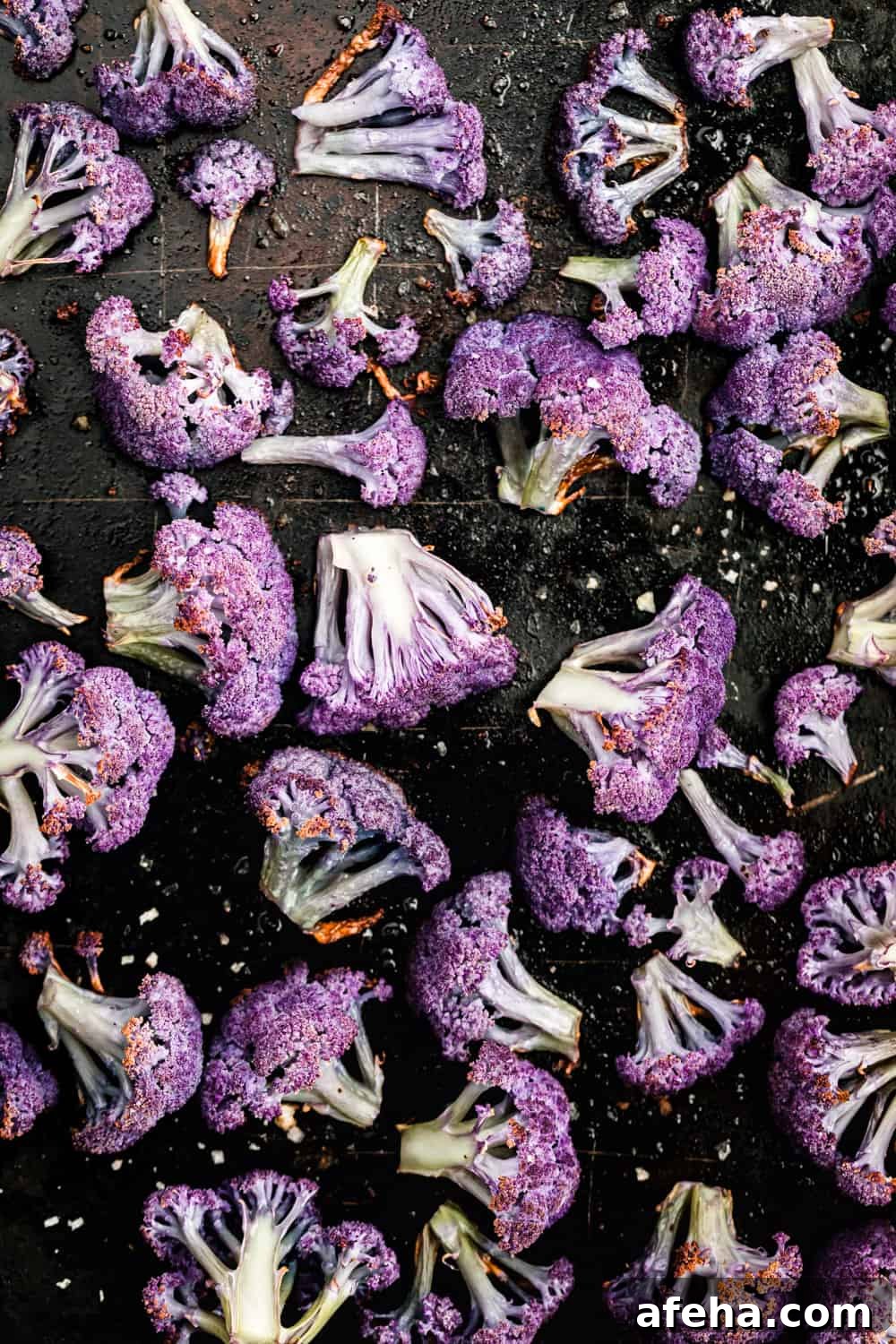
Short answer: not always. High-heat methods like roasting, grilling and sautéing can shift the color toward bluish tones. Steaming or boiling tends to dull the purple and may give the florets a slightly brownish tint.
Pickling purple cauliflower often turns the color vivid pink, which makes for a bright, fun condiment.
How to Help Retain the Vibrant Purple Color
A splash of acid helps preserve color. Add lemon juice or a little vinegar to sautéing or roasting pans, or to the blanching water, to keep the purple brighter. Acid stabilizes anthocyanins and can reduce color loss during cooking.
Buying & Storing Purple Cauliflower
Where to Buy
Look for purple cauliflower at farmers markets in the fall (September–November) when it’s at peak freshness. It’s also available through specialty grocers and some larger markets year-round, especially in regions with extended cauliflower production.
What to look for
Choose heads that feel heavy for their size with tightly packed, firm florets. Color can vary from pale lavender to deep violet and isn’t itself a freshness indicator, but vibrancy and evenness of color are good signs. Avoid heads with dull, patchy discoloration or obvious soft spots. Leaves should be crisp rather than wilted.
How to Store
Store purple cauliflower in a loosely sealed bag in the refrigerator crisper drawer for up to about five days. Cauliflower benefits from airflow, so avoid sealing it airtight. If it arrived tightly wrapped, loosen or remove excess plastic and transfer to a breathable bag to prevent trapped moisture and faster spoilage.
When Is Purple Cauliflower in Season?
Purple cauliflower is a cool-season crop with peak availability in the fall, typically September through November. In some growing regions, such as parts of California, it is cultivated year-round and may be easier to find throughout the year.
Cauliflower Recipes
Here are a few recipe ideas that work beautifully with purple cauliflower, though most recipes will accept any color:
- Silky vegan cauliflower soup brightened with fennel, celery root and ginger.
- Pasta with charred cauliflower, crispy capers and garlicky brown-butter breadcrumbs for texture and flavor contrast.
- Cauliflower tart with a creamy filling baked in a garlic-and-herb crust.
More Purple Fruits & Veggies
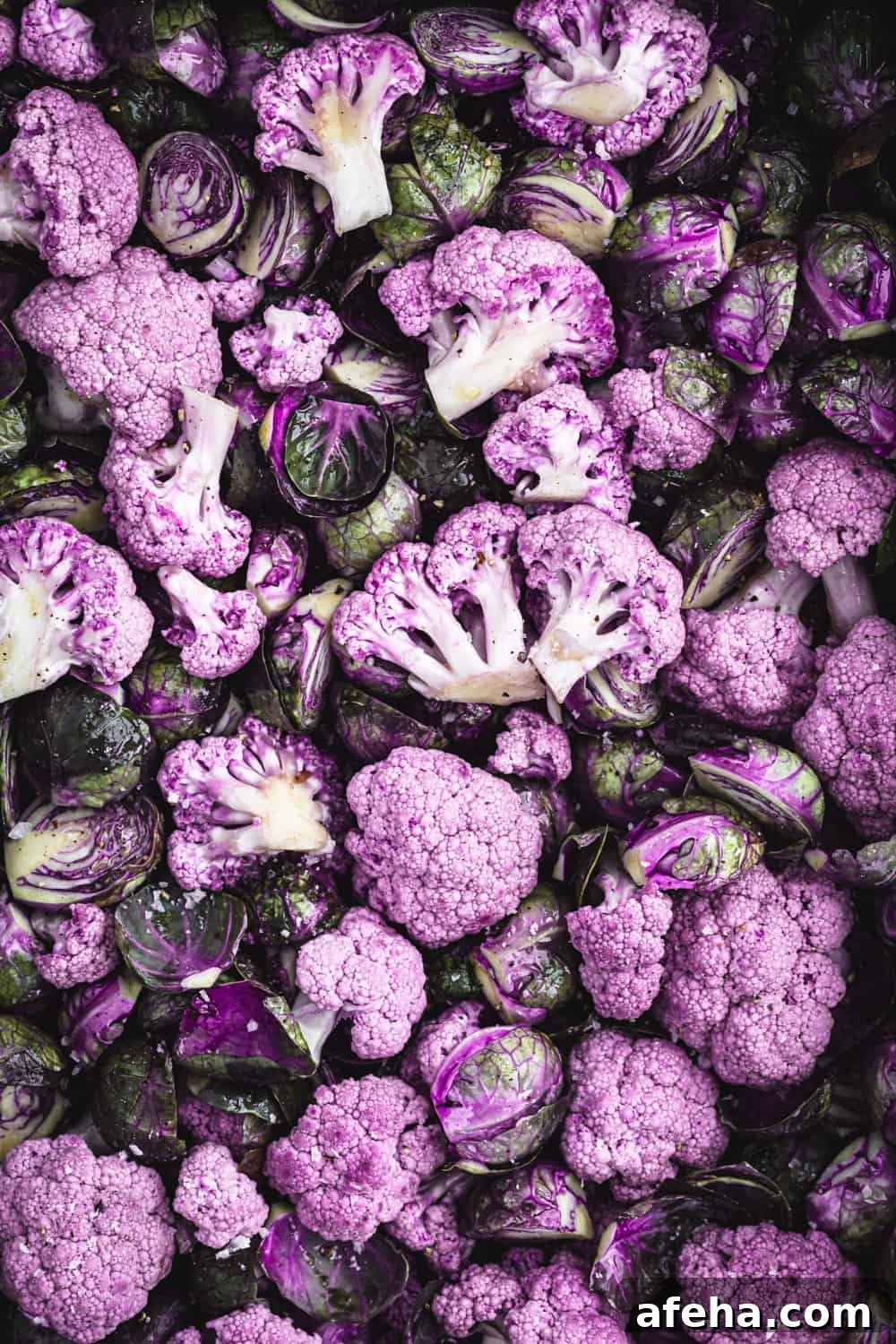
If you like purple cauliflower, there are plenty of other anthocyanin-rich vegetables and fruits to explore—purple potatoes, purple carrots, purple kale, purple Brussels sprouts, purple asparagus, radicchio and mulberries are a few examples. They add color, variety and antioxidant-rich nutrition to meals.
If you spot purple cauliflower at the market, pick one up and experiment. Its striking color makes simple preparations feel special, and a little acid will help preserve that color during cooking. Enjoy creating colorful dishes in your kitchen.
Let’s make waves in the kitchen.