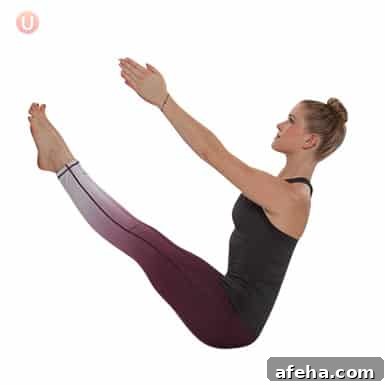
Boat Pose (Navasana) is a highly effective core-strengthening yoga posture that teaches the body to engage the lower abdominals while maintaining balance. Practicing Boat Pose builds strength in the deep core muscles, hip flexors, and the spine, improving posture and stability. For many practitioners the balancing element is the most challenging at first, but with consistent practice and simple modifications, most people can progress safely and confidently.
Tight hip flexors are a common early obstacle. When you extend the legs away from the torso, the hip flexors activate, which is useful because these muscles are often underdeveloped. However, if you move too quickly into fully extended legs the hip flexors can dominate and reduce the intended abdominal engagement. A gradual approach — starting with bent knees — helps ensure the lower abdominals become the primary muscle working in the pose.
Begin by sitting with knees bent and feet on the floor, draw the navel toward the spine to engage the core, and lift the hips slightly as you practice. Hold this variation until the abdominal muscles are stronger and you can maintain the position without excessive strain in the hips or lower back. From there, slowly work toward straightening the legs while keeping the core engaged and the spine long.
If seated floor modifications remain difficult, practicing a supported version in a chair can be very effective. Sit on the front edge of a sturdy chair, hold the sides for support, and lift the hips slightly so your weight is on the sit bones. Keep the toes on the floor while lifting the heels and allowing the lower belly to draw inward. This variation reduces tension in the hip flexors while training the deep abdominal muscles to hold the lift and maintain balance.
Another helpful progression is to start with hands on the floor behind you for support. Lift the feet off the ground with knees bent and hold that position while maintaining a long spine and a drawn-in navel. Once this shape feels stable for 20–30 seconds, lift the hands off the floor and reach the arms forward, which increases the demand on the core. Over time you can work toward straightening the legs into the full Boat Pose.
How To Perform Boat Pose
- Sit on the floor with knees bent and feet flat. Draw the navel toward the spine to activate the lower abdominals and place your hands on the floor slightly behind your hips for support.
- Press into your hands and lift your feet off the floor, bringing the shins parallel to the ground so the knees are in front of the chest. Keep the spine long and chest open while maintaining abdominal engagement.
- When the core feels steady, slowly lift your hands off the floor and extend your arms forward or upward. Simultaneously begin to lengthen your legs upward toward a “V” shape. Keep the spine extended; if hamstrings limit you, maintain a soft bend in the knees.
- Continue to draw the navel in, breathe steadily, and hold the pose for 30–60 seconds or for as long as you can maintain good form. Lower down slowly with control and rest between repetitions.
Key tips for safety and progress: avoid rounding the lower back by keeping the chest lifted and the tailbone slightly tucked; start with shorter holds and increase duration as your core strengthens; and use the bent-knee or chair variations whenever you feel the hip flexors are taking over or the lower back is tensing. With regular practice, Boat Pose enhances core strength, balance, and spinal support, making it a foundational posture for many other yoga poses and functional movements.
Practice consistently, listen to your body, and progress gradually. These simple adjustments and step-by-step progressions make Boat Pose accessible to most students while preserving its benefits for core stability and overall strength.