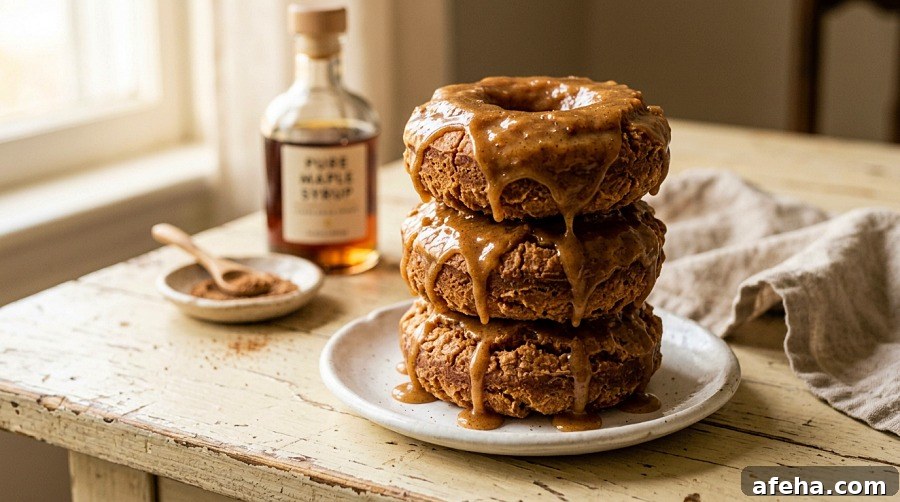
Today is a donut day. Around here that’s often true, but today the craving arrived before my coffee cooled, and by 9 a.m. I was already elbows-deep in dough. If you’ve ever reached past the soft yeast donuts to grab the crackly, glaze-soaked old-fashioned ones, you know exactly where this is headed. These sour cream cake donuts with a maple brown butter glaze are the homemade version of that classic: tender inside, crisp and crackled outside, and absolutely worth heating the stove for.
Frying donuts at home isn’t effortless, but it’s far less intimidating than it looks. One bowl of dough, a heavy pot of oil, and about an hour of hands-on time in the morning. That’s it. The payoff is a stack of warm sour cream cake donuts that taste like the best bakery counter right at home.
Table of Contents
What Are Sour Cream Cake Donuts?
Sour cream cake donuts are baking-powder-leavened, fried donuts made with full-fat sour cream as the main source of moisture and fat. The sour cream tenderizes the crumb, adds a gentle tang, and helps produce the signature crackled, golden exterior when the dough hits hot oil. They’re denser and more cake-like than yeast donuts, with fissures across the top that hold glaze beautifully.
At-a-Glance
| Detail | |
|---|---|
| Prep time | 25 minutes |
| Chill time | 1 hour (or overnight) |
| Cook time | 20 minutes |
| Total time | 1 hour 45 minutes |
| Servings | 12 donuts + about 20 donut holes |
| Difficulty | Intermediate |
| Approx. calories | 310 per glazed donut |
| Cuisine | American |
Below is a complete ingredient list, step-by-step instructions, the maple brown butter glaze, and troubleshooting tips for frying sour cream cake donuts at home. If you’re new to frying, this guide walks you through every step.
Why This Recipe Works
The fat in full-fat sour cream does most of the work: it guarantees tender, moist donuts without thinning the dough like some liquid dairy can. That fat produces a soft interior and a crisp, crackled exterior rather than a greasy result. Chilling the dough is equally important: it firms the butter and sour cream, makes the dough easier to roll, and slows the baking powder so there’s more leavening left when the donuts hit the oil.
The maple brown butter glaze elevates these donuts. Browning the butter adds a toasty, nutty depth, while pure maple syrup brings caramel notes and subtle complexity. A touch of vanilla rounds everything out for a glaze that makes people pause after the first bite.
Ingredients
For the Sour Cream Cake Donuts
- 3½ cups all-purpose flour
- 1 tablespoon double-acting baking powder
- ½ teaspoon baking soda
- 1 teaspoon ground cinnamon
- 1 teaspoon freshly grated nutmeg (or ground)
- ¼ teaspoon fine salt
- 1 cup granulated sugar
- 2 large eggs
- ⅓ cup unsalted butter, melted and slightly cooled
- 1 teaspoon pure vanilla extract
- 1 teaspoon finely grated lemon zest
- 1 cup full-fat sour cream
- Neutral oil for frying (canola, vegetable, or peanut), about 6 cups
For the Maple Brown Butter Glaze
- 3 cups powdered (icing) sugar, sifted
- 3 tablespoons pure maple syrup (grade A amber)
- ½ teaspoon pure vanilla extract
- 3 tablespoons brown butter (from about 4 tablespoons unsalted butter)
- 3 to 4 tablespoons whole milk
- Tiny pinch of salt
Ingredient Notes & Honest Substitutes
- Full-fat sour cream — non-negotiable for texture and tenderness. Full-fat Greek yogurt works in a pinch but yields a slightly denser crumb; low-fat swaps give tougher donuts.
- All-purpose flour — the standard here. Cake flour (about 3¼ cups) makes a slightly more tender donut but reduces the pronounced crackle.
- Nutmeg — freshly grated delivers better aroma; pre-ground is fine with a slightly larger measure.
- Lemon zest — adds bright balance to the richness; it’s optional but recommended.
- Maple syrup — use pure maple syrup for depth of flavor; pancake syrup tastes flat.
Equipment You Will Need
- Heavy-bottomed pot or Dutch oven (4-quart or larger)
- Clip-on candy or deep-fry thermometer
- Donut cutter or a 3-inch round cutter + 1-inch cutter
- Wire cooling rack set over a sheet pan
- Slotted spoon or wire spider
- Paper towels
How to Make Sour Cream Cake Donuts
Step 1: Mix the Dry Ingredients
Whisk together the flour, baking powder, baking soda, cinnamon, nutmeg, and salt in a large bowl until evenly combined. Make a well in the center and set aside.
Step 2: Cream the Wet Ingredients
In a medium bowl, beat the eggs, sugar, vanilla, and lemon zest with an electric mixer on medium-high for about 2 minutes, until pale and ribbony. Stream in the melted butter while beating until combined. Add the sour cream in two additions, beating until smooth but not overworked.
Step 3: Fold Wet into Dry
Pour the wet mixture into the dry ingredients and fold gently with a spatula about 15 to 20 strokes—just until no streaks of flour remain. The dough will be soft and slightly sticky, more like a thick batter; that’s correct. Overmixing creates gluten and yields tough donuts.
Step 4: Chill the Dough
Turn the dough onto plastic wrap, press into a 1-inch-thick disc, wrap tightly, and refrigerate at least 1 hour or up to overnight. Cold dough is easier to roll and yields better texture.
Step 5: Heat the Oil
Pour about 2 inches of neutral oil into the pot and clip on the thermometer. Heat to 350°F (175°C) and hold that temperature. Too cool and donuts absorb oil; too hot and outsides brown before centers cook.
Step 6: Roll and Cut
Lightly flour a cool surface, roll chilled dough to about ½ inch thick, and cut with a 3-inch cutter and 1-inch cutter for holes. Dip cutters in flour between cuts to prevent sticking. For a bakery-style crack, lightly score a shallow circle on top of each donut with a sharp paring knife—just enough to encourage the characteristic split when frying.
Don’t re-roll scraps; instead cut them into small donut hole shapes to avoid toughness from overworking the dough.
Step 7: Fry the Donuts
Fry in small batches (2–3 at a time) so the oil temperature remains stable. Lower donuts gently into the oil; they’ll sink then float in about 30 seconds. Fry about 1 minute per side until deep golden brown and crackled. Donut holes take 1½ to 2 minutes total, turning occasionally.
Step 8: Drain and Cool
Lift donuts with a slotted spoon and drain briefly, then transfer to a wire rack over a sheet pan lined with paper towels. Cool about 5 minutes before glazing so the glaze can settle into the cracks.
How to Make Maple Brown Butter Glaze
Step 1: Brown the Butter
Melt 4 tablespoons unsalted butter in a light-colored saucepan over medium heat. Swirl occasionally; after 3–5 minutes the butter will foam, then calm, and the solids will turn amber and smell nutty. Pour into a heatproof bowl, scraping the browned bits into the bowl, and let cool 5 minutes.
Step 2: Whisk the Glaze
Measure 3 tablespoons of the cooled brown butter into a bowl. Add powdered sugar, maple syrup, vanilla, salt, and 2 tablespoons milk. Whisk until smooth. If too thick, add remaining milk 1 tablespoon at a time until it’s thick but pourable.
Step 3: Dip and Set
Dip the top two-thirds of each warm donut into the glaze, let excess drip off, and return to the wire rack. The glaze will set and form a soft crackled crust in about 10 minutes.
Pro Tips for Perfect Donuts
- Keep the dough cold. If it softens while rolling, chill the rolled dough briefly before cutting.
- Don’t crowd the oil. Too many donuts cool the oil and lead to greasy results.
- Watch oil temperature. Wait until it returns to 350°F between batches.
- Glaze while warm. Warm donuts absorb glaze into the cracks.
- Score for the crack. A shallow paring knife score produces the signature split.
Variations
- Brown Butter Glaze (no maple) — omit maple and add an extra teaspoon vanilla for a purer butter flavor.
- Cinnamon Sugar — skip glaze and toss warm donuts in sugar mixed with cinnamon.
- Chocolate Glaze — use powdered sugar, cocoa powder, melted butter, and milk to taste for a chocolate finish.
- Apple Cider — replace ¼ cup sour cream with reduced apple cider for a fall variation.
Storage, Make-Ahead, and Freezing
Same day: Best within 4 hours of frying; store loosely covered at room temperature on a wire rack.
Up to 2 days: Store glazed donuts in a single layer in an airtight container at room temperature; the glaze will soften but still taste good.
Make ahead: Dough can be made up to 2 days ahead, wrapped tightly in the fridge; roll and fry when ready.
Freezing: Freeze unglazed donuts in a single layer until solid, transfer to a freezer bag for up to 1 month. Reheat at 300°F for 5–7 minutes, then glaze.
Serving Suggestions
A warm sour cream cake donut with good coffee is hard to beat. For a brunch, serve with fresh berries and softly whipped cream. A glass of cold milk also pairs perfectly.
Troubleshooting
| Problem | Likely cause | Fix |
|---|---|---|
| Greasy donuts | Oil too cool | Use a thermometer; let oil recover between batches |
| Outside browned, inside raw | Oil too hot | Lower heat; aim for 350°F |
| Tough crumb | Overmixing or re-rolled scraps | Mix until just combined; cut scraps into holes |
| No crackled top | Dough too warm or not scored | Score lightly; keep dough cold |
| Glaze running off | Glaze too thin or donuts too hot | Add more powdered sugar; cool donuts 5 minutes |
| Donuts collapsed | Old baking powder | Test or replace baking powder |
A Note on Frying Oil and Cleanup
Line surrounding surfaces with paper towels to catch splatters. A splatter screen is a small investment that pays off if you fry more than occasionally. Let oil cool completely before disposing: funnel into a sealed container and discard in the trash rather than pouring down the drain.
Final Thoughts
Sour cream cake donuts take some effort, but the reward is a stack of warm, tender, glaze-soaked treats that rival bakery versions. The maple brown butter glaze pushes them from great to unforgettable. Share them generously — you’ll be asked to make them again.
If you try this recipe, please leave a rating or comment to share what worked for you and any variations you made. Happy frying.