
Chronic Fatigue Syndrome and Fibromyalgia are debilitating and often misunderstood chronic illnesses. Below I share symptoms, personal experiences, and information about getting diagnosed.

I receive as many questions about living with Chronic Fatigue Syndrome (CFS) and Fibromyalgia as I do about saving money, so I’ll address the most common concerns here. I AM NOT A DOCTOR—this is my personal story and what has worked or not worked for me. Always consult your physician before trying new treatments or strategies.
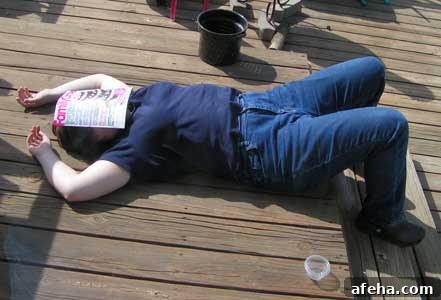
Do you often feel like this? You might have Chronic Fatigue Syndrome…
If you’re frustrated by a lack of understanding from family, friends, or medical professionals, please know: you are not imagining this. You are not crazy. There is a real, physiological problem. Many people who develop CFS and Fibromyalgia were healthy and active beforehand, then suddenly became ill and did not recover to their previous level. I was active from my teens—volunteering at 14, working at 15, maintaining straight A’s in high school while working 20 hours a week and singing in chorus, which took another 20–30 hours weekly. In short: definite Type A tendencies. I became ill in 1988 at age 16 and experienced periods of severe relapse and recovery over the following years.
My mother, brother, and I were all diagnosed in 1988. We all caught what seemed like a bad “flu” and never fully recovered. Eventually, after hearing from a friend about similar symptoms, we suspected CFS. Doctors initially dismissed us, and it was disheartening—after seeing three psychiatrists who confirmed we weren’t depressed, the whole process became emotionally exhausting.
When we spoke with our physician, he recognized the pattern and suggested Chronic Fatigue Syndrome. Since then I have consulted many doctors; most continue to test for other conditions, but results usually return negative. In one case a doctor suggested muscular dystrophy despite negative tests. In 1990 the Centers for Disease Control conducted a study in Wichita in which my family participated. They ran extensive evaluations and described our cases as among the most classic presentations of CFS they had seen.
I improved somewhat during my senior year of high school (1989–1990) and went to Sweden as an exchange student after graduation. I left in June 1990 and by late August I was too ill to stay. I returned home early. I believe the increased walking and physical activity there triggered a relapse—exercise frequently worsens symptoms in many with CFS. The Swedish diet was excellent, so diet wasn’t the cause in my experience.
I attempted to work several times after returning, but each attempt led to longer and deeper setbacks. At my worst I could barely comb my hair. From August 1990 to December 1991 I was largely bedridden. In April 1992 I began receiving Social Security Disability.
For a time I lived in a small town in Colorado where my rent was very low, which made surviving on about $300 a month feasible. It was challenging—isolated, with freezing well water in winter and occasional snow drifts—but it let me be independent without caregiving responsibilities. Later I moved closer to Denver and enrolled in horticulture classes in 1993–1994, hoping to prepare for a greenhouse business I might run if my health improved. Even while ill, I wanted to do something constructive toward a future goal.
This illness is difficult and often lonely. The constant pain, memory issues, and persistent exhaustion are real and debilitating. You aren’t lazy, and you don’t just need to “snap out of it.” You need appropriate medical care, validation, and support.
Read part 2: Getting Diagnosed if You Have Chronic Fatigue Syndrome and Fibromyalgia
Tawra
P.S. CFS affects people differently and can progress through stages. Currently we have semi-functional days; early on I was nearly completely bedridden for a year or two. I remember times when I couldn’t lift my arms to feed myself, or when I had to wait half an hour to summon enough strength to crawl to the bathroom. There were days I lay with my eyes closed because I was too weak to keep them open. I describe more of these experiences in our e-book Common Cents When You’re Sick.
P.P.S. The photo above shows Tawra after attempting to stain her deck—an example of how easily ordinary tasks can overwhelm. Once my mom had a severe reaction to medication and fell; when EMTs arrived they worried the children would be traumatized. The kids shrugged, “It’s okay—our mom does that all the time.” Maintaining a sense of humor helps when you’re that ill.
Jill